Friday, May 26, 2006

Foggy San Diego, Part 3

A little more than halfway through my appointment, after the background questions and the poking and prodding and saying of ahh, Dr. Januario Castro sat down on his swiveling stool and told me what he thought I should do about my CLL:

Fludarabine.

There is an old Gary Larson cartoon entitled “What we say to cats,” in which the first frame shows a woman talking to her cat. The second frame is called “What cats hear” and the cartoon bubble coming out of the cat’s head is a complete blank.

For a few moments anyway, that scene was repeated at UC San Diego’s Moores Cancer Center, as Marilyn and I sat, dumbstruck, on hard plastic chairs with our backs to the wall.

In retrospect, it should not have been a surprise. As Dr. Castro was quick to point out, fludarabine-based therapy is still the standard treatment for CLL.

“Just looking at you, with some good-sized lymph nodes, I think the time has come where we would probably need to incorporate some reatments that use fludarabine,” Castro said

He sees little merit in Rituxan alone, which I have had three times, as readers of this blog know.

“Personally, I never treat anybody with single-agent rituximab," Castro went on. “I think it’s not enough. With somebody as young as you are, with no other comorbid medical problems, I think that we should aim a little higher than just kind of letting the disease advance and go without a really good control. You know, you can have a very good response to fludarabine. I rarely or never use fludarabine as a single agent. From the data we have recently published by John Byrd and his group at Ohio State University, we know that fludarabine and rituximab (RF) not only obtain a better, total response, maybe a complete response, but also prolongs survival in patients with CLL. I think at the minimum, you should have fludarabine in combination with rituximab.”

It could give me a remission of two to four years, he added. We could consider following it with Campath consolidation, meaning that the monoclonal antibody could be used to (hopefully) eliminate most of the residual minimum residual disease.

Castro thumbed through my medical records. He noted that my absolute lymphocyte count had doubled in less than six months, which, in addition to extensive lymphadenopathy, is another NCI Working Group guideline for treatment. As any good doctor should, Castro follows those guidelines.

“For treatment of CLL we have some guidelines,” he explained. “We treat when the white cell count is rapidly growing and the doubling time is less than six months. We treat when there is anemia or low platelet count or when there are overwhelming symptoms, and you don’t have those. Or we treat when patients have a liver or a spleen that is enlarged. You have a spleen that is about 4 cm below the costal margin and that’s probably creating a little bit of that heaviness, that kind of sensation. But it’s not a huge spleen that I’d say we have to treat you right away for that reason.”

While it is true that my ALC has doubled, it is coming back from my Rituxan treatment in December, which knocked it to within a point of normal. Based on what has happened in the past after other Rituxan treatments, it will probably progress, plateau somewhere between 70,000 and 100,000, and dither around, climbing slowly, probably not doubling again within six months. That’s just a guess, though. As we all know, in CLL things can change. And at any rate, I cannot argue with the fact that I’ve got too many swollen nodes, and therefore that I will need treatment pretty soon.

Filling in the bubble

It was time, finally, for the cat to speak. I expressed my reservations about fludarabine, the same ones I have written about in the blog: Fludarabine, when it comes to potential immune problems, is like Russian Roulette. I am Coombs positive and wish to avoid autoimmune hemolytic anemia (AIHA). I have a history of squamous cell cancers and immunosuppression from fludarabine has been shown to lead to serious, even fatal, cases of those cancers. Fludarabine also selects for 17p-deleted CLL clones, which are the most aggressive and least treatable, and therefore the the last thing a CLL patient needs.


A followup to the Byrd study that Dr. Castro cited examined median progression-free survival (PFS) of unmutated patients treated with RF. It was 31 months, shorter for those with the 11q deletion, which I have recently acquired.

I wondered about the wisdom of obtaining what might be a fairly short remission from a “big gun,” so to speak -- one that is, perhaps, better saved for a pre-transplant situation, should it come to that. I know that this is not the conventional thinking, but I sometimes find that the conventional thinking does not take the long view. Dr. Byrd also once wrote about treatments for those on whom fludarabine no longer works -- those who become fludarabine-refractory, which means everyone who uses the drug. Frankly, it’s basically all downhill after that point is reached.

“I keep thinking I would rather not do fludarabine unless my back is to the wall,” I told the doctor, inching forward in my chair, “and I’m not sure that I’m at that point.”

Castro chuckled. “I have that impression,” he said. As the conversation went on, he assured me I wasn’t crazy.

“I cannot disagree with you, because those are valid concerns,” he said. “The only thing I need to make clear is that the conventional structure of the treatment of a patient with CLL is based on fludarabine.”

In combination with Rituxan, fludarabine, warts and all, is “the best conventional treatment that we have available, that we know can give you two, three, four years of disease-free survival,” he said.

The unconventional route: R+HDMP

I asked about Rituxan plus High Dose Methylprednisolone, which was studied at UCSD in chemo-naïve patients in 2004. I have corresponded with some patients who have undergone this treatment, without serious incident and with good results.


Prior to the 2004 trial, R+HDMP had been reserved as a salvage therapy, something for those who are considered “relapsed and refractory” -- that is, those who have failed fludarabine and who are running low on options. The chemo-naïve protocol used a reduced amount of HDMP compared to that given salvage patients, and UCSD is about to start a new R+HDMP trial for the chemo-naïve that uses more Rituxan than before. UCSD will also be doing a new study of the protocol in salvage patients.

“We are expanding the core of patients because we have had such good success with it here,” Castro said.

An abstract was published for the American Society of Hematology meeting last December, summarizing the results of the 2004 trial. In it, Castro and the other authors reported: “Eighty-six percent of the [16] patients had high-risk disease prior to therapy, as per the modified Rai classification. Fifty-six percent of the patients had CLL cells that expressed ZAP-70 and/or unmutated immunoglobulin variable region genes. . . . Objective responses were observed in 14 out of 16 patients (Overall response rate 93%), with 1 patient achieving a complete response (CR) without disease detectable in the marrow, 1 patient achieving a nodular PR, 12 patients obtaining an excellent PR only with minimal residual disease in the bone marrow, and 1 patient having stable disease, as per the NCI-working group criteria. We observed significant reductions in the white blood cell counts, increases in hemoglobin, elevations in platelet counts, and dramatic reduction and resolution in lymphadenopathy and splenomegaly.”

It should be emphasized that this is a small study of barely more than a dozen patients at a single insititution. While I believe the treatment has merit -- after all, what’s not to like about watching the nodes melt away and substantially clearing the marrow without risking the dreaded 17p deletion -- it has not been so successful everywhere, as Castro pointed out.

“The main thing is during treatment to have a very strong surveillance in terms of potential infectious problems,” he said. “We had a patient with sinusitis, with pneumonia. Outside our institution we had a patient with a bowel perforation and actually we had some patients that died at a different institution. We have treated about maybe 60 patients total and we have not had any single death or any patient with major complications. It is an immunosuppressive kind of treatment so it is something that is supposed to be monitored.”

While I do not know any further details about the patients who died outside UCSD, it is possible they were in the salvage category, and those folks are always at higher risk of complications and death no matter what treatment they receive.

But the moral of the story is to be careful if you decide to try R+HDMP at home, so to speak. The exclusion criteria for the 2004 study were published at CLL Topics and are worth a review here if you are considering this treatment. Castro noted that UCSD is concerned about diabetes and bone densities, and does testing for that. I have also recently read two different anecdotal reports on patient forums about vision problems.

Nothing is without risk in CLL therapy, of course, and taking intelligent precautions is the key to minimizing complications

A little bit pregnant

It turns out, in Castro’s estimation, that I am a good candidate for R+HDMP -- pretty healthy other than CLL, nothing that would meet the exclusion criteria I mentioned above. The treatment could net me a remission of 1 ½ to 2 years, he said. (Perhaps more if I were to follow it with Campath, as many of the 2004 patients did.)

But I can’t do the treatment in a trial at UCSD because I have had Rituxan in the past. This means that I am neither fish nor fowl -- neither chemo-naïve (though I am very close to being so) nor fludarabine- refractory. Every trial at UCSD, including those involving Humax CD 20 and R+AT-101 (Gossypol), is geared toward one or the other. I gather UCSD is not alone in the way these things are set up.

“You are going to have problems getting into a clinical study because you are in limbo,” Castro said. “You are not fully pretreated, you have been treated with something but not the best option available, so that is going to create a problem for enrollment in clinical studies.”


Another possibility is to do the protocol outside the trial setting. While it can be done anywhere by downloading the information off the internet, Castro strongly advised that it be done at UCSD, where they are experienced with it.

Were I to do it -- and it is one of the top contenders as far as I am concerned -- I would prefer to do it at UCSD. Convincing my insurance to pay for an out-of-state treatment is another matter.

Conclusions

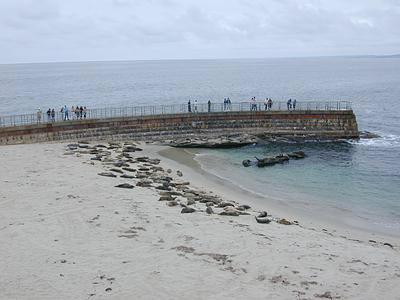
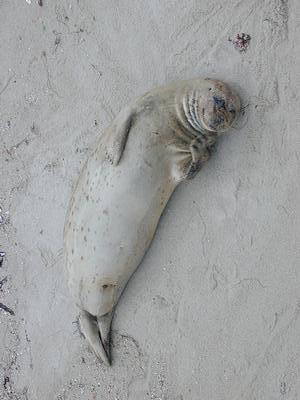
What I took away from my visit, aside from some photos of the beach at La Jolla that accompany this post, was the following:

In the USA there are certain hurdles on the track of treatment. The FDA has approved three drugs for CLL: chlorambucil, fludarabine, and Campath.

Chlorambucil is dismissed by most of the experts here -- though not in the UK and some other places -- and therefore fludarabine is at the center of standard, formal treatment. Clinical trials are geared largely to those who have had no treatment, or who have failed the standard treatment. Those of us who spend a lot of time on the internet, and who read about the interesting approaches discussed in such places as CLL Topics and Dr. Terry Hamblin's blog, tend to forget that in the real world, it’s still fludarabine, fludarabine, fludarabine.

But there is also a growing sense that the drug is problematic (except, perhaps, at MD Anderson, which seems almost religious in its devotion at times). This wondering aloud can be found in the writings of Byrd, and in the remarks of Castro.

Castro said my concerns about fludarabine “are part of investigational issues at this point.”

“I don’t think we have a clear, final answer about how fludarabine impacts your immune system,” he said “In the long run, it’s going to be a medication that maybe in 20 years we’re going to say: ‘You know, 20 years ago we used to treat patients with fludarabine and that was crazy because that was creating all these problems that we later on discovered, a lot of immunosuppression, all these patients that were turning p53 (17p) deficient and were selecting only a population of cells that were resistant and then it was very hard to get those patients treated. The current data doesn’t show that is the case, but --“

I assured the doctor that I understood that when it comes to CLL, as my friend Steve Madden says, the answer is always “We don’t know.”

“I understand how up in the air all of this is,” I said, “and I understand that there are no guarantees no matter what, conventionally or experimentally, in a result or in long-term effect.”

As much as it was important to hear Dr. Castro’s take on my case -- I am glad I made the trip to San Diego -- it was also important for him to hear from a patient who doesn’t believe the standard approach is always the best one. I am not the only one with these concerns, or with this view. The more we in the grassroots push for better options, the faster we are likely to have them.


These better options are likely to come from research at places like UCSD, or Ohio State, which is the next stop on my Summer of Advice Tour.

Monday, May 22, 2006

Goodnight, sweet prince

Pyewacket, 1987-2006

The first cat I ever knew who preferred love to food. He has been one of the greatest blessings in our lives. He was our companion, our friend, and our fellow explorer. May your journey be a good one, my sweet Pye, and may we meet again.

Sunday, May 21, 2006

These little lights

“This little light of mine, I’m gonna let it shine.” – from an old African-American spiritual

On Saturday night, Greg Martin’s extended CLL family lit candles in his memory. The idea came from a member of CLL Forum after news of Greg's death had been posted there; it was a grassroots gesture of the heart.

I met Greg at the forum, which has only been around since February. Greg was one of the first and most frequent posters, and he felt at home there. He was able to speak honestly and openly about his anger and frustration as refractory CLL and severe ITP eroded his life. He needed constant platelet infusions and, even then, had platelets in the single digits. He also had severe fatigue. He once railed loudly against CLL being called an “old man’s disease” because, at 47, he already felt like an old man. It was the little things that were often the hardest: One day he wrote, angry that his koi pond had to be torn out because he could no longer take care of it.

Greg also wrote with great strength and wisdom, telling us not to be afraid of the prospect of death, or of his decision to go into hospice. As much as we were all surprised at his passing -- which was, thankfully, gentle -- he had done much to prepare us for it.

Greg had devoted his last energies to preparing his family for that prospect, also. He had been a Marine -- he posted a photo of himself in uniform back in the 1970s -- and in his final months he soldiered on with one purpose in mind: to continue working so that his wife could get a nursing degree, so that she could support herself and their sons. Greg told us he would fall asleep at his desk, was so fatigued that he was afraid to drive to work. But he kept putting one foot in front of the other for his family.

Greg also had his hopes, one of which was to take his family to Disney World. A few weeks ago he managed to do it, no doubt creating some wonderful memories that his sons and wife will always cherish.

Sometimes Greg would discuss the details of his disease and the limited options for treating it. He once told me that not everyone with CLL is rich, not everyone can just take off from work and go see all the best specialists. His story is a reminder that there are more important things to some CLL patients than their own conditions, and that for many of us, circumstances can limit our choices.

Greg’s spelling wasn’t great, but he could speak with great eloquence. He was angry sometimes, but he was seldom fearful. Bravely, he prepared us for what lay ahead:

”There is another life after this one this I know with all my heart,” he wrote. “I'll be back after this and may be then will meet again. I've been here before. I found my soul mate this time with Polly. I hope in my next life I'll find her again. When you believe like I do, death is a natural thing and not to be feared. To me there is no heaven or hell, but there is a new beginning, a new journey to go on. In away it's kind of exciting, I only wish I could bring some of my knowledge with me from this life, may-be we do. Genetic knowledge, some animals have it, they call it instinct. Our children are getting smarter so may-be we do bring some back with us. I wish I knew.”

Yet, even as he prepared for the next journey, Greg, like all of us, did not want to be done with this one.

His last post, the day before he died, was under the topic “1001 Things To Do Before You Die”:

“See my grand kids,” he wrote, “watch my sons grow old, see how it feels to be 100, see next christmas.”

As Greg said many times, I will say now: I am so angry at this disease. It is the robber of dreams, and of good men and women.

Saturday, May 13, 2006

Foggy San Diego, Part 2

Dr. Januario Castro is a soft-spoken man with a Spanish accent, the product of his Colombian roots. He appears to be in his early 30s, judging from his clear complexion and lack of worry lines. Castro’s white lab coat covered much of his medium frame, stethoscope slung about his shoulders, as he shook hands with us and got down to business.

“Our time today is going to be precious and I hope we can accomplish a lot of things,” he said. During the next hour we were to learn that the doctor is both personable and focused on the task at hand.

As you know from my last blog entry, Marilyn and I went to UCSD’s Moores Cancer Center in search of some answers and options about my CLL. Castro is an assistant clinical professor in the Blood and Marrow Transplantation Division there, which could be a plus down the road if I ever need to take the transplant step. He completed his hematology/oncology fellowship at UCSD, and is board certified in internal medicine and in hematology and oncology. The CLL Research Consortium lists his research interests as “immunotherapy, gene therapy and mechanism of apoptosis applied to CLL.” Basically, he’s devoting his career to the cause.

My main interest, of course, was finding out what Castro thought of my case, and of options for treatment. I brought along a tape recorder, which Castro welcomed, as he doesn’t like patients to focus on scribbling notes at the expense of the conversation. It is his practice to send patients a three-to-four-page dictated synopsis of the visit, so a tape recorder is not essential. But I know from my experience as a newspaper reporter that a recording will be more detailed than notes, and I would recommend recording any important visit with a doctor.

Castro is a second-opinion visit, paid for out of pocket. While at UCSD, I learned that return visits, lab work, and even chemotherapy come with a 30% discount for those in the dreaded self-paying category. I am self-paying here because my insurance is limited to Arizona. It won’t pay out of state without going through the appeals process, and I am likely to get approval only if the insurance company saves money over treatment I would otherwise have had in state. In short, that means they might pay for the ancillary expenses associated with a clinical trial, where the drugs are provided free, but they will not pay for routine treatment outside the sainted borders of the Grand Canyon State. Insurance issues are a headache I can do without, but my experience is not uncommon, and it is a factor in the "where," and maybe even "what," of my treatment.

Case history: nuclear, er nucleus, explosions

The first thing Dr. Castro asked me to do was explain the history of my disease in my own words. Sometimes doctor’s reports are not accurate or thorough, he said, and “you have lived the history of your disease.”

And so, I recounted very briefly what I have explained in detail in this blog, including my diagnosis and subsequent treatments with single-agent Rituxan.

Dr. Castro asked about anemia, low platelets, white blood cell count at diagnosis, symptoms such as night sweats and fevers, and whether I had had any CT scans. He also wanted a detailed recounting of my Rituxan dosages and numbers of infusions.

I had made his job a little easier by preparing a cover letter and some cheat sheets that I included with the medical records I obtained from my local oncologist. The letter explained what I hoped to accomplish with my visit, as well as my reservations about some treatments and interest in others. The cheat sheets came in two parts: The first was a single-page recounting of the results of my prognostic testing. The second was a detailed three-page chart of all my bloodwork since diagnosis, as well as treatment history.

“You have the best summary that I have ever seen,” he said, and I imagine it saved us some time. As he said, time is precious, and I could have used another half-hour on top of the hour I had.

In reviewing my case, Dr. Castro did ask an interesting question about my background: “In your life, have you had any exposure to chemicals, organic solvents, or radiation?”

There has been speculation about the various causes of CLL, and it is interesting to note that researchers are trying to put their fingers on some commonalities. Anyone who has been around the CLL Internetwork has run across stories of Vietnam vets suffering from Agent Orange or workers exposed to benzene or factory chemicals so thick that they formed a haze in the air.

The only thing that may be relevant in my case is the events of July 1962, when I was almost six years old and living along the Colorado River near Parker, Arizona. At that time there was a nuclear bomb test in Nevada, not too far away as the crow flies, and a large swath of the region has since been declared by the federal government to have been potentially affected by fallout. Some “downwinders” in these areas have come down with leukemias and other cancers. The county I was living in was not designated as being at risk for this, but it was adjacent to a county that was. The government has also specifically excluded CLL as being a potential outcome of exposure to fallout, but how many times has the government been wrong about how many things? And does the wind always follow the county line?

Given that it happened when I was young, one would think that I might have developed symptoms sooner had I been exposed, and attributing my CLL to this is highly speculative at best. That is not to say that it couldn't have had something to do with it, or that I couldn’t have picked up a bit of a problem somewhere along the line that my body held in check for years -- before, fatefully, turning its back on the cancer. Some three percent of adults are believed to have CLL cells, but only a few have CLL. The body produces cancer cells daily and the body usually destroys them. When it slips up, shit happens.

During my childhood I also had a severe case of infectious mononucleosis, in which the Epstein-Barr virus invades B cells, and which can be a risk factor for some lymphoproliferative diseases, though not, it appears, CLL. I caught it after having had Thanksgiving dinner at a neighbor’s house. The neighbor was the black sheep of a famous New York publishing family, exiled to teaching second grade in the middle of nowhere. Aside from handing out mono, she was also blissfully ignorant of the rattlesnakes that wandered around the school yard. “If you think it’s a pretty stick,” my mother would warn her, “don’t try to pick it up.”

My mono experience, as well as childhood chicken pox, means that I have some viruses tucked away in my system -- including the Epstein-Barr virus, obviously — and these are waiting to be reactivated by immunosuppressive treatment. Viruses are another theory behind CLL, the idea being that CLL can be an overreaction to the (over)presentation of an antigen. And if that’s the case, who knows what antigen, or when it started.

Dr. Castro jumped to the present day and asked how I felt. Any fevers, night sweats, weight loss? None of the first two and, alas, none of the latter.

How much am I bid for this ZAP-70 test?

The two things that most seemed to intrigue the doctor about me were my discordant ZAP-70 results and the fact that Marilyn and I make a living as eBay powersellers.

There must be something about doctors and eBay, because I once had a primary care physician whose intensity of interest in eBay was not unlike that of a cat following a shiny, moving object. Marilyn’s gynecologist recently spent three-quarters of an appointment discussing the ins-and-outs of eBay, openly wondering about chucking her practice and entering the glamorous world of sitting at home in front of the computer in her underwear. We explained to Dr. Castro a bit about what we sold, the fees we pay eBay, how we interact with customers, field their special requests, and so on.

“eBay is powerful,” he said at one point. The doctor also used it as a metaphor when discussing my ZAP-70 results. Readers will recall from Part 1 that I have had three ZAP-70 tests through Quest Diagnostics, the first two coming out positive and the most recent one negative. Quest is a reputable outfit, headed by Dr. Maher Albitar, formerly chief of testing at MD Anderson.

Castro addressed the issue as part of his general discussion of where things stand in the world of CLL, which he called “CLL 101”:

“It’s getting more recognized that this is a disease where we need to pay more attention,” he said. “Years ago it was seen as a ‘non-important’ disease because patients seemed to be living many, many years with it and the treatment did not make any difference.

“People still argue that patients don’t get a benefit from intense treatment and I don’t think that is the case. I think we are making patients live longer and especially with better quality of life. That’s something that has changed dramatically.

“Analysis of prognostic markers is a major issue and now we have tools that can help us identify patients who can go without treatment for longer periods of time and others who need to have treatment relatively soon after they are diagnosed. We have some information we have published that says that probably the best prognostic marker we have nowadays is ZAP-70.

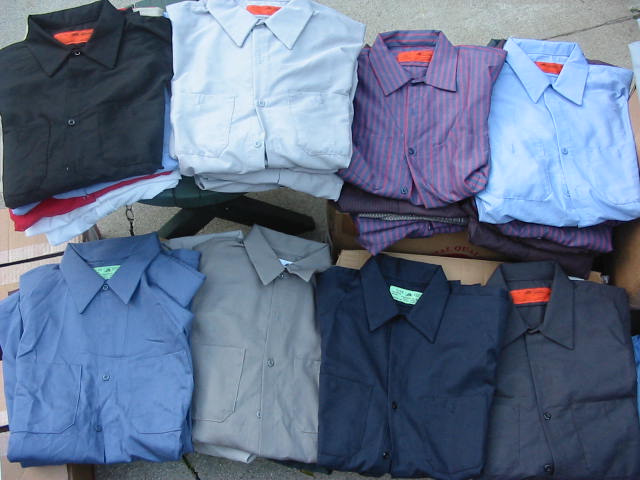
“The problem with ZAP-70 is that it is a test that is a little tricky to do. There is not a good way to know if it is positive or negative. You need to have your internal controls, there is nothing that you can use that is produced by a machine, to calibrate your machine. It’s more of a human sample versus a human sample. It’s like if someone is telling you on eBay ‘I want a blue shirt,’ it’s like ‘What is blue?’ – it can be a dark blue, a light blue.. . .

“That has created a problem that has been recognized by many people. I know very well Dr. Albitar. He was at MD Anderson. He does a good job. But it is kind of interesting to see that kind of variation that has been reported in your ZAP 70. We have not seen that.”

To help get to the bottom of this, Castro made me an offer I couldn’t refuse: namely a free ZAP-70 test and a free mutational status test at the UCSD lab. This is part of a study by the CLL Research Consortium, in which a patient signs a release and the blood samples are taken (“five yellow-top tubes for Dr. Kipps’ lab”) and given a number to protect the patient’s privacy. The blood is then made available for research, the results of which are not necessarily disclosed to the patient.

“I highly recommend to every patient that I see to get into that study,” Castro said. “We’re going to do some testing, put it in the cell bank and maybe later use it for research type of experiments . . . When we see something that we believe will be beneficial to the patient, we will disclose that information to the patient. The ZAP-70 and mutational status is something that we can give you.”

Both Castro and I now await the results, to see what color blue my ZAP-70 shirt is. UCSD is considered by many experts to be the best place in the country for ZAP-70 testing, so I am willing to accept the result as definitive.

“I have tested samples that are 15, 20 years old, the same patient 15 years apart, and we have not seen variation in the ZAP-70 expression," said Castro. "So I am kind of curious to know. Maybe we can do it sequentially, see if there is anything particular, because of your cells, or if it is something that is more in relation to a variation of the technique that they are doing outside [at Quest].”

Then it was time for a physical exam, followed by the doctor’s recommendations about treatment, and I learned that, metaphorically speaking, I am a little pregnant. (Certainly, with any number of lymph nodes swelling up in my abdomen, I am starting to look that way.) The story of my visit will conclude in Foggy San Diego, Part III.

Speaking of blue, the photo above is lifted from an eBay auction of a few years ago, in which the seller was hawking a "blue fur robe." In it, a couple of eBay captains of industry are seen accompanying their merchandise, plying their trade in informal attire. By the way, there was a "lucky winner," as eBay sellers are prone to say, of this auction. . . . So doctors, is this the life you dream of outside medicine?

Sunday, May 07, 2006

Foggy San Diego, Part 1

Ah, the fog. Coming from Arizona, where the sun seems to shine 366 days a year, it was a pleasure to visit San Diego, which was covered in gray, moist fog for much of the four days that we were there.

This is a broad atmospheric fog brought on by the Pacific Ocean, not the thick stuff that lays on top of roads in the middle of the country. The ocean fog is higher up, replacing the blue of the sky, occasionally misting car windows and people’s faces. At night it gives the moon a fuzzy glow. When Marilyn and I arrived at our hotel, bleary after the nine-hour drive, I looked up and noticed a couple of fuzzy full moons. Tired as I was, I knew the Earth was unlikely to have acquired any additional satellites while we were passing through Yuma. Turns out these were white balls on the power lines high above us; in the fog they looked like moons, which contributed to the other-worldy atmosphere.

Coming from a land that is so dry that one can create static electricity while petting the cat, there was something comforting about humid, cool air near the sea. We used to live in the San Francisco Bay Area and on the Oregon coast, so the weather sent us back to the past. They say that smell, more than anything else, can trigger memories. The odor of the ocean, and its fog, brought us back to easier, simpler days.

Those were the days before CLL, which, alas, was the reason for our visit to San Diego. If you have followed this blog, you know that I am searching for the next step in treatment beyond single-agent Rituxan. The Moores Cancer Center at UC San Diego is part of the CLL Research Consortium, and Drs. Thomas Kipps and Januario Castro have done some interesting research and clinical trials that seek a softer-glove approach to our chronic disease. These include Rituxan and High Dose Methylprednisolone (HDMP) in both new and relapsed patients, as well as research into ways to attack the ZAP-70 protein that many of us CLLers unfortunately express.

I have had the pleasure of corresponding by e-mail with several bright and helpful people who have had good experiences at UCSD. While Dr. Kipps is better known, I decided to visit his junior partner, Dr. Castro, for a variety of reasons. The main one is that I felt I would get more time and attention from Castro, who isn’t quite as busy as Kipps. Another is that Castro has done much of the hands-on work with patients in the various clinical trials, and therefore might have detailed and direct knowledge of the results and side effects of the treatments.

The Moores Cancer Center is a large, modern facility, but no more complicated to navigate than your average hospital. The staff was organized and helpful, and except for one obviously burned-out technician in the blood-drawing department, universally friendly. Marilyn and I also received a personal welcome from a fellow patient and UCSD veteran, Lise Rasmussen-Wright. Lise dropped by the waiting room and just as we entered maybe the fifth minute of our conversation, I was called in for my appointment. Apparently one can usually expect to be called in late, and I became perhaps the first patient ever to be called in early, so our visit with Lise was far too short.

After the weighing in, for which I was asked to remove my shoes but not my 40-pound lead belt, and a blood pressure check, from which White Coat Syndrome could be deduced, we were led to the examination room. White Coat Syndrome? Well, here I was, in an institution of the vaunted CLL Research Consortium, about to be seen by a doctor whose name I have actually seen on abstracts.

It is a setting that helped the seriousness of my situation sink in. As we walked across the parking lot toward the imposing cancer center, finished in colors of sea green and sand, I told Marilyn: “I guess this means I really do have a problem.” I am past the point of local doctors in out-of-the-way places telling me that I have the good cancer, and not to worry. What I have merits a big building and busy researchers.

Perplexing prognostics

It would be useful here, before I tell you about my visit with Dr. Castro, to back up for a moment.

For one paragraph, let us return to September 2003, when I was diagnosed. At that time, the only prognostic test generally available was CD 38. Mine came out at 12%, or “negative.” Based on that result, and the fact that I suspected having had CLL since an elevated white cell count in 1996, we assumed my case might be fairly cooperative. It had progressed to the point where my spleen was moderately enlarged, as were many lymph nodes, and my absolute lymphocyte count (ALC) was 130,000. But from what little we could make out in the fog of knowledge, my case did not seem especially aggressive. That view was compounded when I responded quite well to single-agent Rituxan in January 2004. This treatment knocked my ALC down to 2.2 and reduced the spleen to normal. Many nodes, but not the largest ones, also disappeared.

In May 2005, I had Quest Diagnostics run a complete profile on me. Thanks to the negotiating efforts of CLL Topics, Quest prognostic packages had just become readily accessible. Quest is headed by Dr. Maher Albitar, formerly the chief testing dude at MD Anderson, and no slouch in finessing and developing all manner of tests.

The results were a mixed bag: The worst news was that I failed the IgVH mutational status test, coming out as unmutated. ZAP-70 was at 18%, then retested a month later -- long story, don’t ask -- at 27%. Both exceeded the 15% cutoff and made me, sadly, ZAP-70 positive. If there was any consolation, it was that my FISH was “normal” with none of the problematic deletions such as 11q or 17p.

It was becoming apparent that my CLL was a little worse that I had originally figured. But I must insert a big word of caution here: The prognostic tests we have today, as much as they are an improvement over what we had just a few years ago, do not provide a complete picture of an individual patient’s CLL. There are other pieces of the puzzle waiting to be discovered. Today’s tests can also yield contradictory, discordant results -- of which, it turns out, I am a prime example.

The main purpose of prognostics is to indicate which cases are likely to progress. In my case, it is a moot point because my disease had already been progressing prior to diagnosis.

But we are learning now that prognostics can have value in determining treatment, and in duration of response to treatment. Those with 17p deletions have the CLL clones that are hardest to kill, and they don’t respond well to fludarabine. Campath is perhaps the drug of choice for those folks. People with 11q have clones that don’t like to die, and that tend to settle in the lymph nodes. Those with 13q seem to do the best. While most classes of patients can achieve a deep remission with such treatments as fludarabine and Rituxan, the duration of those remissions is shorter in unmutated patients, and in those with 17p and 11q deletions. For an interesting report on this, read Chaya Venkat's review at CLL Topics, which looks at Dr. John Byrd’s study of RF therapy by mutational status and FISH results.

Fast-forward to March 2006. I saw my local oncologist, Dr. Chopin, the one who is leaving her practice at the end of this month. At my request, she ordered the Quest Diagnostics Monitoring Package, which consists of everything but the kitchen sink, which in CLL is the IgVH mutational status test. Since that status cannot change, there is little point in testing it periodically.

The monitoring package retests for FISH, CD 38, ZAP-70, and B2M. When I asked my doctor to order it, I had assumed that things would probably be as they had been last year: “normal” FISH and ZAP-70 positive. I hadn’t had my CD 38 tested in some time, and since it can change with disease progression, I feared that it might be on the rise. (After all, single-agent Rituxan was working on me less well, and for shorter durations.) My doc had checked B2M a few times, and at its worst, just before needing treatment, it had been a fairly respectable 3.0.

Black Monday

The first surprise came tumbling through my fax machine on a Monday, which I nicknamed Black Monday, in honor of the stock market crash of 1929. That, as we all know, led to the Great Depression. I could have fallen into my own Great Depression, but I picked myself up, dusted myself off, and began to figure out how to remake lemonade now that I had another big lemon on my hands: My FISH test was positive for the ATM deletion -- the “high risk” 11q -- on 24% of cells.

In terms of prognostics, my two saving graces had been the “normal” FISH and negative CD 38. Now I had been dealt a serious blow; some 20% of CLLers have 11q. In unmutated patients, where the disease reproduces faster, 11q can be a big problem. (Some of us remember the difficult case of the late Joe Tullman, the original CLL blogger.) But it can also be manageable -- I have two friends with 11q who have kept it under control without resorting to nuclear chemo combos. The other problem with 11q is enlarging lymph nodes: My respectable nodes, which seemed to top out at 3 to 4 cm, might soon get much bigger if the disease were left unchecked.

From Monday until Wednesday, when I got the second half of the results, I assumed the rest of the sky would fall. Progression to 11q is a sign that things are getting worse, not better. And except for a handful of cases, CLL never gets better on its own.

I took a walk in my favorite spot here in the red rocks of Sedona, which ends in a panoramic view of Boynton Canyon. I can sit there, in a quiet and shaded spot, and think.

What lay before me, besides the view, was finding my hope. I believe, as does Dr. Jerome Groopman, author of The Anatomy of Hope, that hope is a realistic path to a better future. I mulled over the treatment possibilities, the debates about burning bridges, the promising new drugs such as Humax CD 20 that are in the pipeline. I wondered, as Dr. Terry Hamblin asks, what is the aim of treatment?

Even before the news of the 11q, I knew that single-agent Rituxan was no longer the best option for me and that I would need treatment of some kind before the end of this year. The arrival of 11q did a couple of things for my thinking: It made me appreciate the idea of thoroughly clearing the nodes, where it tends to hide. It made me that much more wary of doing anything that might lead to a 17p deletion. And the concept of controlling the 11q, specifically, entered my mind. I have since learned, as Dr. Hamblin has written, about PARP inhibitors that may assist cell death in 11q. I also began to wonder about the merits of achieving a deep, deep remission, perhaps one that is negative for minimum residual disease (MRD). The thought was: if I can knock the 11q back while it is still a minority clone, so much the better.

With all these thoughts came a reminder about UC San Diego. In the summer of 2004, UCSD ran a clinical trial of Rituxan and HDMP in untreated patients. It was especially effective at reducing the nodes and spleen, but it also reduced CLL in the bone marrow significantly. Those patients with residual disease in the marrow were offered participation in a subsequent Campath trial, and some achieved MRD negativity. Since then, I have heard of no major complications with HDMP among trial participants, nothing to make me reject it out of hand. Rituxan + HDMP, perhaps with a Campath chaser, seemed like an option. Rituxan + chlorambucil, about which Dr. Hamblin has written, seemed like another.

And then there’s my old nemesis, fludarabine. Despite everything, fludarabine still seemed out of the question. If my back is moving toward the wall, it is not there yet. I am Coombs positive and risk autoimmune hemolytic anemia if I use fludarabine. I am also prone to squamous cell skin cancers and risk those as well (as I might with Campath, too). On top of this, fludarabine-based therapy brings with it a higher risk for Richter's Transformation and acquisition of the 17p deletion (read "Demographics and Clinical Features Associated with Fludarabine-Refractory CLL" here). If there is still some hope of muddling through with 11q, having 17p means a one-way ticket to a risky stem cell transplant. (And guess, of course, what my health insurance expressly refuses to pay for.) Dr. Hamblin has also pointed out that the immune system never totally recovers from fludarabine. It is important to remember that I feel fine, I am not coming down with B symptoms or lots of infections. CLL-filled as I am, I remain more functional than not.

As long as there are any other options, I see fludarabine as an “In case of emergency, break glass” choice. It is something, to my mind, to be reserved for clearing disease before a transplant, if it comes to that.

I know, of course, that this defies the conventional thinking. But the conventional thinking does not take the long view. The median time to disease progression of unmutated patients in Dr. Byrd’s RF study was 31 months. It is no doubt less for 11q patients. Why blow a big gun like that when I can achieve remissions that might last almost as long at much less cost to my body, and that still preserve options such as RF for the future?

With that in mind, as I took in the view of the red and purple canyon (the photo above shows it on a snowy day), I resolved to go to UCSD and ask about R + HDMP specifically and my case in general.

(I also resolved shortly thereafter to visit Dr. Byrd at Ohio State. They do interesting research there, too, and Byrd is about as respected a figure in the CLL world as one can find. I imagine he might challenge my views of fludarabine. I am seeing him next month.)

The wheels in the sky keep on turning

On Wednesday, I received the rest of my test results. I was happy to see that my B2M was normal, at 1.8, which was not too surprising since I had completed Rituxan therapy three months before the test was done. I was quite happy to find that my CD 38 was a paltry 1% -- about as negative as you can get, and lower than it had been at my diagnosis.

But the big surprise came in the ZAP-70 results -- I now tested at 8%, which was described in the report as “borderline negative.” (The cutoff was 10% for shipped blood samples, which mine was.)

The last thing I expected was for the ZAP to go down. I read through the Professors' Posts on the ACOR help page, and I gather that this is a very rare occurrence. It appears that, at first, this wasn’t even believed to be possible. Then it was reported in a small number of cases in Spain. Nobody seems to know much about the whys and wherefores of the change.

I wondered, of course, about testing errors, and recalled the words of one CLL expert as reported by a patient, that the ZAP-70 test is basically garbage at this point. Still, it’s not like I had the test done at Wal-Mart. Albitar and Quest are respected in their field.

And so, there I was, entering UCSD with conflicting prognostics: unmutated and new 11q, CD 38 in the cellar and ZAP-70 apparently heading that way. A disease ramping up and down at the same time.

The ZAP-70 results caught Dr. Castro’s eye, and I’ll tell you about my visit with him in the next installment.

Friday, April 28, 2006

Is FCR up to par?

When I was diagnosed with CLL in 2003, the FCR bandwagon (fludarabine, cyclophosphamide, rituximab) was in full swing. I came rather close to jumping on board. After all, the MD Anderson Cancer Center in Houston was reporting that 70% of previously-untreated patients who had been given FCR had achieved a complete response.

To a newly-diagnosed patient who is told that he needs treatment, this is a tempting proposition. Only later did it sink in that “complete response” is never truly complete, and that depth of response may not correlate with how long you live, or what the researchers call “overall survival.”

Indeed, the central question about CLL therapy has not been answered: Given that one has a chronic disease that might span 20 or 30 years, will you live longer if you reduce the disease as much as possible at some point, even while taking on the additional toxicities of potent therapy, which might also lead to disease resistance to future therapy?

I hope to delve into that question soon, since it bears greatly on the treatment decisions that I am facing, and that all of us face. But for now, it is enough to look at the question of clinical trials. As a new patient, I had assumed that these trials are pretty much the same, and that the bigger the name of the institution, the more reliable the results.

Today I am older and wiser.

The question of how trials are conducted goes to the heart of the usefulness of the data we have on FCR. What I am learning is that, on one side, we have respected CLL researchers such as Dr. Terry Hamblin and the CLL team from Ohio State University, who argue that randomized, controlled, phase III trials are essential. And on the other side we have MD Anderson, equally respected, which regards them as unnecessary.

As in many things CLL, the experts disagree.

The traditional approach


Dr. Hamblin's article Are We There Yet? at CLL Topics argues in favor of randomized, controlled trials, or RCTs -- which is not the method used by MD Anderson in evaluating FCR.

States Hamblin: "The only way to satisfactorily compare two treatments is by a head-to-head, randomized, controlled clinical trial of sufficient power to distinguish between the treatments. . . . RCTs like this are called phase III trials. When there is no comparison, except with what went on in the past (so called historical controls) the trials are called phase II trials. The MD Anderson Cancer Center is a great champion of phase II trials. For CLL they have done large phase II trials of fludarabine combinations. Two in particular are important: fludarabine and cyclophosphamide (FC) and FC plus rituximab (FCR). . . . because the patients weren't randomized between the various types of treatment we do not know whether they were similar groups. All these studies do is provide justification for an RCT."

In an online post entitled "Clinical trials," Dr. Hamblin wrote:

"The randomized clinical trial is an invention as important as the airplane or the computer. . . . Both patients and doctors want the disease to be cured. No matter how objective we think we are, studies have shown that we have an unconscious bias towards certain results. This is why we randomize, to take away that unconscious bias. . . .

"With some of the drug combinations that we have today we have lots of information about short term effectiveness. We know that FCR, for example, produces a very high remission rate, and those remissions are quite long, on average. But because we have not had a randomized controlled trial, only comparisons with what has happened in the past, it remains a treatment that's not always available and one that hasn't really won its spurs. We don't know for instance, whether responses occur in patients with less severe disease, but less so with the more malignant forms, or what will happen to those patients who relapse (which probably means all of them, eventually). Will they respond a second time? Will they have a better overall survival than patients treated in other ways? Will there be long-term unforeseen side effects?

"Controlled trials of FCR are now taking place in Europe and worldwide, but not in America where the treatment was invented. I certainly hope that FCR proves as good as its supporters claim, but as of now, we don't have the evidence we should have."

The MD Anderson shortcut


MDA’s Dr. Michael Keating, the father of FCR, has not commented in much detail publicly on this question, but there was some discussion of it in a feature story that ran in MDA's Conquest magazine in 2004. The story, profiling Keating and MDA's CLL research team, can be found here. Some pertinent excerpts:

"In a period of 20 years, we've gone from an attitude of trying to control the disease with simple medications to gaining a more realistic expectation of curing some patients with these combination therapies," Keating says. "Since we have an outstanding natural history database that includes every M. D. Anderson patient treated for leukemia since 1965, we've been able to track and record treatment responses and survival among these individuals."

The “cure” question raised by Keating is the subject for another debate, but focusing on the question of trials, the author of the article goes on to state:

"Because the database has enabled Keating and his colleagues to better predict how well patients will respond to therapy, they have been able to move their clinical research forward without having to conduct any randomized, comparative studies.

“Such progress is due, in large part, to the work of Susan Lerner, manager of clinical protocol administration, and her team of 11 research data coordinators. She has worked on CLL with Keating since he began his studies in 1983.”


So the difference in positions could not be more stark. Is MD Anderson right to be thinking outside the box, as it were? And should I -- or should you -- bet my body on it? To put it another way, which is more trustworthy, Sue and her team, or a RCT?

MD Anderson is in Texas, where they like to think big, and MDA is known for its aggressive and varied clinical trials. We patients owe our heartfelt thanks to those who enter trials, at MDA or elsewhere, to help pioneer new therapies. There is no doubt that research progresses faster, and gets to market sooner, if one avoids the lengthy process of phase III trials. If one can leapfrog ahead, one may stumble upon useful things sooner, but one may also make more mistakes, and the unconscious bias Dr. Hamblin talks about might enter the picture.

So, is FCR really a chemo star?

Dr. Keating and the MDA team published two articles about FCR in the Journal of Clinical Oncology last year. One dealt with chemo-naive patients and the other with relapsed patients.


Their conclusions?

For naïve patients, “FCR produced a high CR rate [70%] in previously untreated CLL. Most patients had no detectable disease on flow cytometry at the end of therapy. Time to treatment failure analysis showed that 69% of patients were projected to be failure free at 4 years (95% CI, 57% to 81%).”

For previously-treated patients, “The FCR regimen was an active and well-tolerated treatment for previously treated patients with CLL. Myelosuppression was the most common toxicity. FCR induced the highest CR rate [25%] reported in a clinical trial of previously treated patients with CLL. Furthermore, molecular remissions were achieved in a third of patients achieving CR.”

Sounds good, right?

These studies were accompanied by an editorial written by Drs. Thomas Lin, Michael Grever, and John Byrd, all of Ohio State. The full text of the editorial is available here, and I highly recommend it to anyone considering FCR or the like.

The authors have some good things to say about the potential of FCR and combination chemoimmunotherapy. But they also have some direct warnings about the MDA data and against jumping to conclusions about new therapies before they are proven (boldface mine).

“The first report by Keating et al summarizes the results of fludarabine, cyclophosphamide, and rituximab (FCR) in 224 previously untreated CLL patients. Extraordinary clinical activity was observed, with CR in 70% of patients, nodular partial response (NPR) in 15% of patients, and partial response (PR) in 15% of patients. The OR rate was 95%, though the percentage of stage I and II patients was higher than in most earlier studies. It is unclear what proportion of these early-stage patients had symptoms.

That last sentence is telling. One wonders at the implication. Could some of the MDA results be based upon early stage patients who, it might reasonably be argued by other doctors, did not really need treatment? (And beyond this, what are the results by disease profile --mutated v. unmutated, 13q v. 11q? Do “Bucket A” patients respond better or longer than those in “Bucket C,” and is there a preponderance of one or the other in the study? How were patients chosen, if not by a randomized method? Was there any “unconscious bias,” as Hamblin puts it?)


The Ohio State authors go on to discuss data from MDA as compared to that on FR from trials in the Cancer and Leukemia Group B (CALGB):

"Although the M.D. Anderson report by Keating et al and the CALGB comparison study both report highly encouraging results, one must remember that these findings still represent phase II, noncomparative data. The difference in patient demographics between these two studies, with younger, earlier-stage patients being enrolled onto the M.D. Anderson study, could be a major contributing reason for the difference in complete response rates between these two studies. At the present time, PFS [progression-free survival] between these two studies seems to be similar. With respect to both trials, one only needs to recall the excitement generated by highly aggressive combination treatments in the treatment of aggressive NHL in the 1980s. Similarly distinguished institutions reported phase II results that seemed superior to cyclophosphamide, doxorubicin, vincristine, and prednisone (CHOP), yet a phase III study by the Southwest Oncology Group showed that all three regimens were no better than CHOP. The value of multi-institutional, prospective, randomized phase III studies should never be underestimated.

When the risks are potentially as great as the rewards -- not all patients gambling on FCR are winners -- and one has the luxury of doing something less risky (which I fully recognize that not everyone has), I believe it is wise to wait until the proper trials are done.

Unfortunately, MDA's reputation in the patient community, and among local US oncologists, can lead people to leap without thinking. It is assumed that the data is sound. In fact, the idea that some experts would find fault with it is almost inconceivable. But to err is human, and removing the human component from pivotal studies such as FCR is not only wise, it can also be a matter of life and death for patients.

Friday, April 21, 2006

When leaving medicine is the best medicine

Why does a doctor hang up her stethoscope and quit?

I don’t mean a doctor who reaches their 60s or 70s and wants to retire. I mean a doctor in her 30s, who not long ago spent countless hours and uncountable sums of money learning her craft. One with a long and potentially bright career ahead.

This question is on my mind because my hem/onc has decided to quit her practice as of the end of May. She doesn’t exactly say why in her letter to her patients, but her office staff provides a little more information: She wants to “go in a new direction in her life.” She “may do some traveling.”

“Doing some traveling” is sometimes a catchphrase for “finding yourself.” I never got the impression that my doctor -- we'll call her Dr. Chopin -- was particularly unhappy with her work. Not that we discussed her situation too much when I visited. She was usually focused on palpating my lymph nodes, knocking on my rib cage to check the liver, and having me breathe deeply so she could go in search of my spleen.

“I can feel a spleen tip,” she would say more often than not. Sometimes we would discuss treatment options, and we once had a long discussion of what we CLL patients talk about all the time: If I use therapy X, am I burning bridges, so how do I control the disease incrementally, as it were. At the end she termed this an “esoteric” discussion, which surprised me, because it was composed of the down-to-earth considerations that patients deal with.


But I liked her general manner, which was businesslike in an easygoing, friendly sort of way. She hid nothing from us (for Marilyn was always there with me) and we felt comfortable being honest with her. If we disagreed about a treatment, we agreed to disagree. I have a feeling that, had she been our neighbor and not our doctor, we might have been gotten along pretty well.

She did let slip an occasional frustration. Once she complained about a health insurance company reviewing her and finding that she had “prescribed too much.” As I recall, she said, “Either the patient needs the drug or they don’t.” Another time she spent much of our appointment talking about the frustrations of dealing with some patients, probably the ones we had seen as we passed by the open door of the examination room next to us. They looked frozen, blank, in shock. There was only so much a doctor can do, Dr. Chopin told us. A doctor cannot make happen what nature has decided cannot happen. Another time, perhaps a year ago, when she may have started entertaining thoughts of leaving her profession, she mentioned that she had seen a movie she liked called “What the BLEEP Do We Know?” It’s a New Agey picture about the meaning of life, and Dr. Chopin declaimed briefly about life's mysteries. Most recently, our always-busy doctor pointed out that she had done the unheard of on a Saturday -- slept in until 11 a.m.

In her bedside manner, Dr. Chopin was not the touchy-feely type. But perhaps she was, inside, and just wasn’t able to let it out -- until now. There must be great frustrations as well as great rewards in hematology/oncology. One saves lives, and one also sees them lost. Dr. Chopin had a lot of breast cancer patients, women her own age, some of whom met their ends well before their time.

Perhaps this left an impression of life’s shortness, and perhaps being in the trenches for six years or so left my doctor with the feeling that there was something else she could be doing, something less consuming and more personally fulfilling. (I do know she is not married and does not have family obligations, which can sometimes lead to career changes and reassessments.)

I cannot really complain -- well, yes I can, because I know it won’t be easy to find a doctor with whom I will get along as well -- but I once did something similar. I gave up a promising journalism career in my 30s when it became apparent that I was going to end up as an editor for the rest of my life. Reporters are a dime a dozen but editors are hard to come by. Still, I knew I had the soul of a writer. Writers act and editors largely react (and being city editor of a newspaper is like herding cats of varying levels of competence.) I remember looking down the long road one day, wondering how it would end. It would have ended in a position of some importance at a newspaper we’ve all heard of, and this would have impressed my family and friends. But my heart sank whenever I thought of it.

Dr. Chopin was just named a “Top Doctor” by Phoenix magazine, an annual event in which doctors vote for their best colleagues. So I suppose it can be argued that she is quitting at the top of her game. I hope we are losing her because her heart brightens at the thought of doing something else, and not because the grind of her work is making her want to scream and run away.

I will miss the sound of her clompy black shoes as she approaches the examination room and pulls my file from the plastic holder on the outside of the door. That task will fall to someone else now. I wish Dr. Chopin luck, and I wish it for myself, too.


P.S.

There was a hilarious abstract on PubMed from Harvard Medical School called "Leaving medicine: the consequences of physician dissatisfaction." The conclusion? "Our findings demonstrate that dissatisfied physicians were 2 to 3 times more likely to leave medicine than satisfied physicians." I wonder how much money it took to figure that one out.

Wednesday, April 12, 2006

Here they come . . .

Sometimes, with my warped sense of humor, I see the various drugs used to treat CLL parade before me in a rather grotesque and unsettling beauty pageant. I sit as the judge, flanked by my white-coated medical advisers.

There’s Miss Rituxan, comely and alluring, though some say she’s a bit mousey. Too bad her solo talent is a little too limited. But she’s definitelty going to be one of the winners; for in this pageant there will be a minimum of two and perhaps even a third, that will steal my heart with their combination of talent and beauty. Or what passes for beauty in these things.

Miss Fludarabine comes trotting out again, a contender in every pageant so far, and always an also-ran. She’s big-boned and can belt out quite a tune, but I wish she’d find one besides “You’re My Refractory Baby.” Plus, she’s covered with skin cancers. Somehow, I just can’t open my heart to her.

Her sister, Miss Pentostatin, is a little more demure, a little more petite, perhaps a little less able to hit the high notes, as well as the low notes. Somehow she is getting lost in the blur as the contestants tromp across the stage in formation singing: “This is our time, and we’re gonna make it fine!”

I can’t take my eyes off Miss Campath, or as she prefers to be called, Mistress Alemtuzumab. Not every contestant comes attired in black boots and carrying a whip. This isn’t my thing, but she does stand out. She has a certain authority, and is effective in the talent portion, but I do wonder how severely she might kick my ass.

Miss Chlorambucil has been in so many of these that she is going to appear with a Rhinestone-covered walker someday. Her baton twirling act is the best in the land, if you like baton twirling. But it’s coming back in fashion, and some of Miss Rituxan’s glow has rubbed off on her. Maybe she’s wearing her hair differently. All I can think is, “Why, Miss Chlorambucil, I never thought of you like THAT before.”

The show stealer is Miss High-Dose-Methyl-Prednisolone. The name wouldn’t even fit on the sashes that the other contestants are wearing, but Miss HDMP is a lot taller than the others, and so her sash is a great deal longer. She also has biceps as big as a tree trunk. Dig those washboard abs! No swollen spleen or nodes in there. She reminds me of those pumped-up East German female athletes of yore, and she is winking at me a lot.

Somewhere back in the crowd is that perennial contestant, Miss Cyclophosphamide. She usually blows it during the question-and-answer part, when I inquire about her views on the 17p deletion. Just talk about world peace, girl! Maybe your day will come, but don’t get your hopes up too high this time.

Tripping all over herself is Miss Vincristine. Must be the peripheral neuropathy she’s suffering. I do believe Miss Mitoxantrone is having a heart attack in the back, as we speak. Or is that Miss Doxorubicin? Hard to tell from here. They’re among that group that always gets eliminated shortly after they’re introduced. Chief among them is Miss Mini-Allo. She can puff out her chest all she wants; it ain’t going to help. Still, it’s nice to see she’s there.

I hear there may be some interesting contestants in future years. There’s a lot of buzz about Miss Humax, but she’s still learning how to walk and smile at the same time, and as much as I might want to fantasize about other contestants -- stop the show, it’s Miss Cure! -- I am left with the group that I am left with.

It’s quite a circus -- er spectacle -- er pageant. And I can’t wait for the finale. I have some white-coated advisors to consult, but I’ll let you know who wins.

Friday, April 07, 2006

Customer disservice

It happened again the other day. I heard Marilyn, down the hall, talking on the phone.

"Customer service," she said.

Then a little louder: "Customer service!"

Then screaming into the phone:

"CUSTOMER SERVICE!
CUSTOMER SERVICE!!
CUSTOMER SERVICE!!!"

Marilyn was trying to navigate one of those automated voice menus that you reach almost every time you call a credit card company or a bank or a department store. This one was voice-responsive, or so it claimed.

"Which department do you want?," the disembodied voice had asked her. "For 'customer service,' say 'customer service'. "

Which Marilyn was trying to do, and the irony of the situation was not lost on me.

Fortunately, there is a website out there run by people who have gotten fed up with having to suffer through endless menus that ask us to "say or press 1" for this and that, with the result of being navigated to even more menus, all of which become an annoying blur and raise one's blood pressure.

So, as a public service, allow me to present http://www.gethuman.com/. The site has a database of workarounds for various companies, as well as some tips on how to get through to a human being wherever you call.

And, yes, this is health-related. Stress has been shown, anecdotally at least, to raise one's lymphocyte count. High blood pressure can lead to heart attack or stroke. Think of this as a medical necessity.

Sunday, April 02, 2006

The other foot

“Some memories are realities,
and are better than anything that can ever happen to one again.”
--Willa Cather, My Antonio


My CLL diagnosis has, among other things, made me aware of mortality in a way that I was not before. I used to live in one realm, the everyday, mundane world where the sun always rises. But now I also live in another, a realm in which I know that one day I will not live to see it set.

Sometimes I wonder: Is this a curse, or a blessing, or both?

My wife, Marilyn, says the body is like a ticking time bomb, that everything seems OK until it goes off. In good health, life seems endless. Death is a vague intellectual concept, not a visceral reality. It’s hardly a concern at all, really.


Perhaps we humans are hard-wired not to think about our demise; perhaps Western society, with its endless fascination for youth and progress, does not like to consider that those entertaining features will come, for every last one of us, to a screeching halt.

But when that time bomb goes off, one must live, at least on occasion, outside the comfort zone that most of us spend a lifetime building. Even with cancer we still live mostly in the mundane world, attending to our daily doings, but we are sometimes forced out of that coccoon into a fearsome new place.


This new realm is awesome, in the traditional sense of the word; we enter it with gaping jaws, dumbstruck in the presence of the mysteries of life and death. So long as we live we cannot completely know these mysteries, but in this realm we accept their palpable presence and our connection to them. Sometimes we enter this realm with a thought, or a passing emotion, or a memory, or after hearing some bad medical news. Sometimes it steals upon us like a breeze, and then passes. If you are living every day with leukemia, it is never far away.

In this realm one can sense the eternal cycle of creation, shrouded in a cloak of uncertainty, promising us just one thing for sure: the loss of the world we have known. It is the realm where our greatest fears must be faced as rites of passage. And yet, this is the place of our most profound hope: To live after, to be connected again to those we love. For lack of a better term, and to differentiate it from the everyday world, I call it the Realm of Life and Death.

When one of those bodily time bombs explodes, it can shake up the world of loved ones, too. This is especially true where the bond of love is deep, as with Marilyn and me. Now she must learn to live without taking anything for granted except that the harrowing second realm is close by.

As with many cancer patients, my diagnosis came like a tornado, picking up everything in its path. In the beginning, both of our energies were sucked into the dark cloud, and our focus become what to do, how to cope. This can become the normal state of affairs after awhile, a new reality in which the patient’s progress becomes the marker by which a family unit measures time. CLL becomes the sun around which the planets rotate.

And yet, we patients need to guard against becoming self-centered, or allowing the center of attention to drift too much toward our own needs and away from those of our loved ones. For I have come to know in the Realm of Life and Death that Marilyn, too, will one day wake and not live to see the setting sun.

This was driven home to me recently as I sat in the waiting room of a doctor’s office for more than two hours while a an emergency colonoscopy was performed on the love of my life. When it came to care, the shoe was now on the other foot, and I was reminded of what it is like for Marilyn to cope with my CLL: the anxiety, the fear, the mix of tears and prayers, the challenge of holding it together enough to think rationally in a world that has suddenly become arational.

For several days Marilyn had had severe abdominal cramping, along with a number of other nasty symptoms, which only seemed to be getting worse. The office of our primary care doctor insisted that she see the nurse practitioner, since the Great Man Himself was booked solid for two weeks. This nurse practitioner is a nice person, but her level of skill as it applies to any given condition is not unlike that which one can acquire in an hour of searching the internet.

So I fired our doctor and found another, who has an interest in gastroenterology and agreed, after hearing about the symptoms, to see Marilyn that very day. After he saw her, he scheduled a colonoscopy for the next afternoon.

And so I found myself in the waiting room, hoping that whatever it is is easily fixable, not really serious, nothing that will blindside us like my leukemia did. After a cancer diagnosis, one can never again count on all being well. The body is a time bomb, the immutable truth of the second realm awaits.

I sit in the waiting room writing these notes as the colonoscopy drags on; in the corner a TV attached to the wall lords over the array of chairs, blasting forth a fluffy talk show that entertains, and perhaps sometimes annoys, its captive audience.

I look up when there is a segment about pets who look like celebrities. People sent in pictures for this. “She thinks her dog ‘Poochie’ looks like Jack Nicholson!,” giggles the host. I watch, I smile. Some of them are pretty dead on. I sit there, one foot in the breezy, mundane realm of laughter and forgetting, one foot in the Realm of Life and Death.

Soon I am back to finding nothing to smile about, for it is in some ways harder to be the mate of the sick person than to be the sick person. The threat of loss -- of an end to everything that makes life a joy, and to be left with nothing but the memories of what was, with no prosepct of having such joy again in this life -- is more fearsome than death itself.

If I die of CLL, leaving Marilyn behind, I go from one journey to the next (perhaps), leaving her to live what could only be described as a purgatory on Earth, in which half of her is missing. It would be easier, I think, to be the one who passes on.

Out of love for her, I do not want to leave her in this condition. I remember having a nightmare once, about ten years ago, when Marilyn had another medical problem that at first appeared extremely serious: I was alone, in a spacesuit, floating eternally and aimlessly in the black space between the stars. It brought with it a gnawing feeling of despair and loneliness that I will never forget.

And so this is a powerful force in my life, to live for her, to spare her a long purgatory, to stay alive for us, and to continue to enjoy our life together. This is a drive, subconscious and unconscious and superconscious, of such significance that I have no doubt that it will help prolong my life.

But I know, perhaps, that this will only put off the inevitable. One day, one of us may go before the other. If it happens when we are old, it might be just a little easier, for the time in purgatory would be shorter, the day of reunion -- or the bliss of forgetting -- closer. If it happens sooner, it will be that much harder, bringing with it the prospect of unbearable and prolonged pain.

There was a German composer named Louis Spohr, who lived from the time of Beethoven through that of Schumann. He dearly loved his wife, Dorette, and his early works, written in the atmosphere of their completeness and love, were touched with the genius of the great composers. At Beethoven’s death, he was considered to be the next great man of music. And then, unexpectedly, his beloved mate died, and his inspiration, his very abilities, began to lessen. He recognized this and wrote about it in his autobiography. Here was a man who, in the flower of love, made music; without it, he could do no more than assemble notes.

Not that this is true for everyone. Beethoven never married and wrote great music to the end. But for some souls, who thrive on love, the death of a mate is the same as removing the cosmic feeding tube, the very nourishment of life.

I wondered today, holding Marilyn’s hand in the waiting room as she nervously awaited her colonoscopy, what was my lesson in this life? There are those who believe in reincarnation, and who posit that we are sent back to life to learn what we failed to learn before. Accepting this as a fact (for the moment, at least), what lesson did the powers-that-be want to teach me?

This has always mystified me, for while I have learned lessons about this and that, I never saw an overarching theme.

Until today, tears welling up, I realized: To know what love is.

I have come to know it by its absence, when I was very young and my parents broke up at exactly the wrong time in my life. By abandonment and fear and loneliness I have missed love profoundly. As an adult, I have come to know it by its fullness, by its tenderness and acceptance and by its remarkable depth.

Marilyn and I used to joke that we would both die together, sometime in our eighties, in a car accident. It was our way of not thinking about life without the other, of accepting that our journey is, from here on out, made together.

But what if there is no accident? What if one of us does die first? Marilyn recently said she sees no purpose in dwelling on the matter, nothing to be gained from it. I think she is right.

It is enough to wake each day and put one foot in front of the other, hand in hand. And from the vantage point of the Realm of Life and Death, to appreciate the beauty of the act, the faith it represents, and the joy it sustains.

Epilogue: We were granted a reprieve. The colonoscopy turned out OK, and showed nothing cancerous or life-threatening.


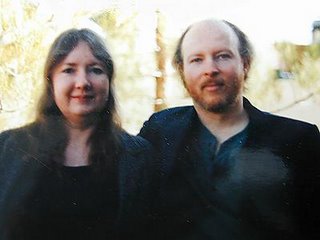
The photo above dates from ten years ago, the year I had a blood test that showed an elevated white count, and which I now suspect was the beginning of my CLL. The time bomb was going off, quietly.