Friday, February 23, 2007

Hanging on

Some friends of mine were wondering: Is a transplant worth it in chronic lymphocytic leukemia? Is it worth the potential hell of graft v. host disease? Is it worth the risk of failure or relapse? Is it not better on some level to get a great remission (or two) with chemotherapy and live to the fullest in the time before the disease claims you piece by piece? At some point, might it not be wiser to take a shortcut -- perhaps assisted suicide? -- around all the pain and trouble, complications and disappointments, that come with progressing disease, shutting doors, and a body at war with itself? There is no cure, and we know the suffering that the long drawn-out end might bring, so why endure it, and why visit it upon our loved ones?

That's tough stuff to hear. But these sorts of questions can weigh on the minds of CLL patients with progressing disease, especially younger ones for whom the bell seems to toll all too soon. We are the rock and roll generation, after all: Live fast, die young.

CLL affords its victims the grace of time -- time to say goodbye, to make amends, and to think about the consequences of fighting, and of not fighting. Those who had always hoped for a quick and painless passing may find this discomfiting. With CLL, one's passing might be relatively painless, but it is not quick.

And so it is legitimate to wonder about things that our friends and family would rather not hear. Some of you reading this are no doubt thinking "I wish Dave would write some more about his automated trash can." But death is potentially part of the CLL picture, and it is a fair topic of conversation.

And so I entered the discussion my friends were having, and this is what I said (with a little extra added in hindsight, as is a writer's prerogative, thus making me seem much more erudite than I did at the time):

There is a time to lay down one's arms, give up the fight, and go gently into that good night. This is when people quietly decide enough is enough and simply give themselves permission to let go, letting the end come when and how it may. Some go into hospice, some stay at home; I’d like to drag myself to the beach and stare at the sea and be carried away by its rhythm.

But for me, that time will not come until every avenue is exhausted. I have heard transplant stories, and transplants can be a living hell, but they can also be relatively easy. Even for people who have to put up with all kinds of problems, the benefits can outweigh the drawbacks. Patient blogs tell the story: A 17p-deleted patient on her second transplant who, despite skin problems, goes on a cruise. A young father, in his 40s, who suffers post-transplant seizures but finds them a small price to pay for the privilege of being here with his wife and kids.

So long as I can prop my ass up in bed, hold the hand of the woman I love, laugh at stupid puns, listen to music, see the hawks flying outside my window, taste a fresh apple, and smell the desert sage after a rain, I will fight this thing.

Why not do a transplant now, cut out all the intervening waiting and worrying and fighting that can drain you emotionally, financially, physically? Well, transplants are risky (even if they hold out the promise of a cure for some) and the longer I wait, the better the procedure will get. It's all a matter of timing. I'm 50. I can wait 10 years, if the disease will allow it, which it probably won't. But I can have a pretty good quality of life for the next however many years, and then roll the dice.

I am not a gambler but this disease is making me one. CLL is all about gambling. Dice. Poker. (Russian) Roulette. Pick your metaphor. Leukemia is filled with games of chance. Timing is everything, along with luck.

Sure, it's tempting to go with something like RFC to get a great remission now and not have to worry for awhile. But the cruelest thing about this disease is that these remissions don't last, and they get harder to duplicate. Is chemo a fool's paradise? Or does it allow for a last bit of real paradise (aka disease-free living) before the shit truly hits the fan? I can't fault anyone for going with chemo now; who knows how it will all turn out. The best we can do is play it as we see it.

Should we avoid a transplant, sit tight for as long as we can, and wait for a cure? (Calling Mr. Godot!) I don't think we'll see a cure anytime soon, especially for those of us who have gone beyond the infancy of the disease. Honestly, I think we're at least 20 years away from a cure. A CLL expert doctor once said that the fight against CLL will be one long war of attrition. I think he's right. What this means is that we patients have to play the game with the cards we're dealt today. (Who knows, maybe we can exchange a card or two if things go right; I don’t think a cure will come soon, but I do believe there will be incremental progress in treatment.) None of this is a reason not to stay in the game.

And so I say, hang on.

There will be plenty of time to explore the world after this one. So long as the sun rises and there is music to be made, so long as there are exotic ports of call and children to hug, this life grants enough small pleasures to make the pain of struggle worthwhile.

So, hang on. As long as Marilyn can hold my hand and I can know she's there, I'm going to hang on.

Today is our 24th anniversary. I do not know if there will be twenty-four more. But it won’t be for lack of trying. Happy anniversary, my sweet. Together, we will see what love can conquer.

Saturday, February 10, 2007

Bass ackwards

I recently read Chaya Venkat’s take on Revlimid at CLL Topics. Is this thalidomide derivative new and promising in chronic lymphocytic leukemia, or new and overhyped given the paltry data we have on it? I’ll leave that for you to judge. 

Revlimid, or lenalidomide, is being touted as a drug for refractory patients, and that is why it is the object of such interest. As Chaya says, and as any big-name CLL doctor will tell you if they’re being honest, there are few drugs available for fludarabine-refractory patients. There is Campath, there are steroids such as HDMP. There is flavopirodol, still in trial at Ohio State. And perhaps HuMax-CD20, when it gets on the market. (There are a few others, basically no more than twinklings in researchers' eyes at this point.) None of these save Campath -- or a risky stem cell transplant -- have yet proven to be powerful players for those who have smoldering bridges behind them and powerful rivers to ford ahead.

Chaya puts it this way:

“It is a pretty well understood fact of life that most cancer drugs will eventually stop working and patients will become refractory to them. Fludarabine is a famous example. For a majority of CLL patients it works like gangbusters the first time around. But as surely as there are taxes to pay each year, patients develop resistance to the drug after a while. The words 'fludarabine refractory' have an ominous sound to them, and rightly so. Patients who no longer respond to fludarabine have far fewer choices.”

In case you doubt what she’s saying, read Dr. John Byrd’s Management of Patients with Fludarabine Refractory CLL, which constitutes part three of the 2004 ASH Education Book.

Take particular note of these comments in the opening paragraph:

“For some patients CLL is an indolent disease that never progresses to require therapy. However, when patients become symptomatic with their CLL, the OS with older therapy is quite short, ranging from a mean of 1.5 to 6 years. . . . At the time of relapse from initial response to fludarabine, 40% can be retreated and will respond again to the same regimen. Data with respect to retreatment with fludarabine and cyclophosphamide or fludarabine-based combinations with rituximab are currently not available. Ultimately, virtually all CLL patients who are treated become fludarabine-refractory.”

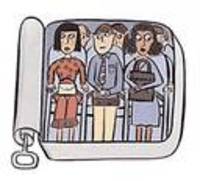
So why is the lady on the left -- this image is currently being used by manufacturer Berlex in marketing Fludara -- so happy?

OS is medical shorthand for “overall survival,” something that is “quite short” with older therapy. It may well be longer with newer treatments such as Rituxan-enhanced chemo combinations and Campath. Perhaps it will go from “quite short” to merely “short.” Maybe it will even double -- let’s assume, without any statistical basis but for the sake of argument, that the mean OS of patients using today’s therapies is 3 to 12 years.

I don’t know about you, but I want to live longer than that. For CLL patients in their 40s and 50s with progressing disease, living to the ripe old age of 70 is going to be a challenge. And I bet that even if you’re in your 60s, you’d like to see 80. Things have gotten better for us CLL patients, but they are still not good enough.

Being precipitous at the precipice

Against this backdrop, I think it is fair to say that the treatment of CLL has its own time frame, which has a center point that is as significant in its own way as that of the Christian calendar. Christians divide time into B.C. and A.D., Before Christ and Anno Domini (“In the year of our Lord”). In CLL, there is B.F. and A.F. -- Before Fludarabine and After Fludarabine. Alas, our holiest of drugs provides only a temporary salvation.

So let me pull out my soapbox, upon which I will declaim for a moment about the premature use of fludarabine while dabbing the froth from my mouth: Judging from both personal experience and what I read on patient forums, there are far too many doctors who recommend fludarabine in some combination or another (or even by itself) without giving adequate weight to the consequences. There are patients who can definitely benefit from combination chemoimmunotherapy such as RFC or RF and who cannot afford to wait. But there are many patients who have been hustled into such therapy without really needing it, or without needing it yet.

Usually, but not always, the doctors at fault are well intentioned local hem/oncs who aren’t too familiar with the subtleties of CLL. These subtleties include variations in the disease as diagnosed by FISH test and IgVH mutational status and how treatments work on these subgroups; deciding which among the array of symptoms are important and at what point they demand therapeutic intervention; deciding which therapy is best tailored to cope with those specific symptoms; and thinking down the road about the effect of this treatment on the next and how to preserve as many choices as possible for the future.

Intelligently handling CLL takes effort, but it is not exactly a mystery on par with those known only to the Oracles at Delphi. The information is out there, easily reachable by doctors and patients with a Google toolbar. Everyone should read the NCI guidelines for treatment. And there are two sources of knowledge that are as invaluable as they are available: One is the aforementioned CLL Topics. Chaya, who has a background in science research and education, has done a great deal of thinking about all these issues and has a feel for the lay of the land. The other is Dr. Terry Hamblin’s posts on ACOR and the medical posts on his blog. Terry is forthright and independent-minded and has no vested interest in selling anyone a bill of goods. While one might occasionally disagree with something they say, both are honest brokers who have shed an enormous amount of light on CLL management and care. Any doctor or patient who pleads ignorance when it comes to CLL is not really trying. End soapbox.

The cart and the horse

Which brings us back to where we started. Do you want to add years to your life? Maybe you can do it on the front end, through wise extension of watch and wait. You certainly aren’t going to do it on the back end, when you are fludarabine refractory.

Much research is devoted to finding new drugs, such as Revlimid, for refractory patients. This is necessary and important. (Revlimid is new to CLL but not new; it has been used in myelodysplastic syndrome and multiple myeloma.)

Less emphasis has been placed on what can be done to delay the moment at which patients become refractory in the first place.

This means that improving your OS is partly up to you.

You can extend watch and wait au natural -- that is, by not taking any drugs and simply waiting until things get so very, very bad that you have to. If you expect CLL experts to agree on when, exactly, that point has been reached, forget it. I have written about my own experiences, in which Doctor A would have me in RF therapy and Doctor B would have me watching and waiting. Suffice it to say that I like Doctor B’s approach better. (For patients seeking an expert with a conservative approach to the timing of treatment, I recommend visiting Dr. Hamblin or Dr. Byrd. There are no doubt others, but these are the two I know most about.)

Extending W&W can also be done by using things that may help control disease progression, but at little cost in terms of building disease resistance.

These include the aptly-named chemopreventives, such as EGCG, the green tea polyphenol. It seems to help some people, and it has been in a CLL Topics-sponsored clinical trial at the Mayo Clinic. Hopefully this year, as the ground thaws in Rochester, MN, we will finally hear some results.

There are vaccine trials, such as Genitope’s MyVax, in which early stage patients are given personalized vaccines in an effort to foment an immune response against CLL cells. It’s experimental, of course, but if it works it could become an important tool.

Then there’s the slightly more costly stuff in terms of disease resistance and possible side effects -- single agent Rituxan, for example, perhaps with boosters such as EGCG and fish oil (Chaya’s “RHK” protocol) or Beta-Glucan or steroids. This is what I have been doing -- using immunotherapy to stave off the day when I have no choice but to start chemotherapy. I am not the only one doing this, and none of us know how well or how long it will work.

And that brings me to the larger point here: The world of CLL research is focused on maximizing remissions when treatment time comes and then on finding ways to save the inelegantly-named salvage patients who have relapsed from those very remissions. Little effort has been devoted to extending the time before chemotherapy is needed, before the first step is taken down the slippery slope.

Fortunately, a paradigm shift may (slowly) be in the works.

Early intervention

Why has it taken so long to try to put the horse before the cart?

A big reason, I think, is that researchers haven’t had the tools to work with until now. They didn't know whose disease was likely to progress, or why. And we have only recently come to understand in depth some of the cellular mechanics at work in CLL. You cannot target a therapy unless you know what to target it at.

There are other considerations. Staving off the inevitable may not seem like so worthy a goal when you have patients for whom the sword of Damocles has definitely dropped. Perhaps it is a matter of time and resources, and perhaps there is more glory and money in providing deeper remissions when treatment is needed than there is in the mundane act of merely keeping something from happening.

But thanks to what has been learned about a host of things, especially IgVH mutational status and chromosomal abnormalities as detected by FISH, the idea of risk-based management of CLL is beginning to take hold.

Indeed, there are those experts who wonder if early intervention might not even cure CLL in asymptomatic patients who are likely to have progressing disease. Yes, I said “cure,” and this is how the idea of early chemotherapy enters the picture. Until less invasive approaches like vaccines prove effective, chemo that of late shows improved depth of response may be the likelier route to a cure.

If I could move the clock back to 1996 or whenever it was that I was a Stage 0, asymptomatic patient, and if I knew that RFC plus every other letter in the alphabet might give me even a 25% chance of a cure, I’d try it.

There is a growing consensus today that early intervention may be warranted in 17p-deleted cases, which are known to turn rather quickly aggressive and have the shortest survival. The dangers of chemo may be mitigated by the dangers of letting the worst form of CLL get out of hand. Determining who might benefit from early treatment and what that treatment is -- and the answers probably won’t be the same for every patient -- is a logical next step, fraught as it is with ethical questions.

Dr. Byrd has proposed an early intervention trial, CALGB 10501, in which high-risk (unmutated) patients would be split into two groups: One group would receive FR in the traditional time frame, when symptoms develop. The other would receive it early on, before symptoms arise. There have been some concerns about this in the patient community -- can more harm than good be done to some of these early treated patients? I am not sure what Dr. Byrd regards as adequately “high risk” (is mere unmutated status enough?), or that FR without cyclophosphamide or follow-up Campath is the best method of treatment. (Indeed, there is a similar trial under consideration in the UK that uses Campath alone.)

But answering the general question -- Will early intervention in patients who are likely to have progressing disease lengthen their overall survival or even lead to a cure? -- is important.

As Dr. Hamblin has commented:


“The idea of early treatment studies is that you can now pick out from marker studies those patients that will eventually need treatment. For this group it might be that treatment with curative intent could succeed while the bulk of disease is small, yet is doomed to failure by the time the bulk increases sufficiently for the disease to become symptomatic. It is an hypothesis that should be tested with a clinical trial. . . . The trials should go ahead because we really ought to know the answer. This sort of trial will have an end point of cure, so the sooner they are started the sooner we will know.”

Dr. Byrd indicated in his presentation here that it could take 5 to 10 years to work this out. (He also issued the caution that, outside of a clinical trial, “treatment should not be initiated until symptoms or cytopenias develop from CLL.”)

Until then, we patients are going to be left largely to our own devices.


Green tea, anyone?

Saturday, February 03, 2007

Supersize me

I am now the proud owner of an infrared trash can. It’s stainless steel and has a battery-operated sensor that opens the lid when you approach it and closes it when you’re done. It works like a charm, the only drawback being that I am unable to program it to make a burping noise when it closes.

Until last Tuesday, I didn’t know such a thing existed. Last Tuesday is when I joined Costco and my eyes opened to a lot of things.

Costco, for those of you who live in quaint places where shopping is still done at the corner store, is what is known as a warehouse store, or Big Box. There are some 375 Costcos (Costci?) in the US. The average Costco is about the size of a municipal sports arena and contains everything from plasma TVs to packages of croissants large enough to feed the Third Arrondissement.

Indeed, almost everything at Costco is supersized. Light bulbs cannot be purchased in packages of less than 16. Batteries come in lots of 12. Cheese wheels really could be used as wheels. Oversized boxes marked “Tropicana” contain enough orange juice to inundate the lowest-lying parts of Florida. Shoppers toting 30-unit packages of toilet paper resemble ants carrying crumbs twice their size. After a few minutes in a Costco, one is thrown back to early childhood, when adults and their furnishings all seemed so very, very big.

The attraction is, of course, low prices. For access to these you pay $50 a year to join and you get an ID card with your picture on it. Marilyn and I joined because the car needed a new set of tires and Costco was practically giving away Michelins, with a $60 off coupon to boot.

During the time it took to get the tires installed, we trolled the aisles of our new shopping sanctum, which is how I found the infrared trash can. At $36.89, it is cheaper than similarly sized non-automated cans at Bed, Bath and Beyond, and the same model is sold online at various places for twice the price. With two buttons on the front of the lid and the flashing infrared sensor between them, it has a pinched face-like look that resembles one of the hokey robots from Mystery Science Theater 3000. Sometimes, like the computer Hal in 2001: A Space Odyssey, I can almost hear it talking to me: Hi, Dave. I’m hungry, Dave. You don’t need the rest of that sandwich, do you, Dave?

We also have our eyes on the new computers. (You can configure a new PC at HP.com and you can configure the same exact PC through Costco.com’s HP portal and save $255.)

And I must admit that the plasma TVs looked rather tempting.

As did the asteroid-sized package of crab and gruyere cheese in puff pastry.

And the six-pack of wine.

Lots of money we’ll be saving.

Right.

Sunday, January 28, 2007

Doctors are from Mercury, Patients are from Uranus

John Gray is the author of Men are from Mars, Women are from Venus and innumerable sequels. He has made a mint trying to explain the differences in the way men and women think, which is one of the oldest conundrums in civilization.

There is a similar mind-bender, almost as ancient, and it may as well be entitled Doctors are from Mercury, Patients are from Uranus. (I have given doctors Mercury, as the Roman God’s caduceus or wand, at right, has been adopted as a medical symbol. I have given patients Uranus, since patients can often be a pain in the nether regions, and often ought to be for their own good).

Most patients are, quite simply, mystified by how doctors think. But coming to an understanding of how this process unfolds (when it unfolds) is crucial to developing a good relationship with one’s doctor, and to knowing if the doctor seems to be doing what’s best. Here, in our corner of cyberspace, we can pick up some clues by reading the medical commentaries of bloggers Dr. Vance Esler and Dr. Terry Hamblin (links at right). In the world at large, one hem/onc who has made a valiant attempt at explaining what goes inside the minds of medicine is Dr. Jerome Groopman, whose book Anatomy of Hope is certainly a good read.

Now Groopman has written a piece for the latest issue of The New Yorker entitled How doctors think. Not that we patients are going to come to a miraculous, Eureka-like moment anytime soon, but it’s worth a look, as it helps demystify the process a little bit more. It can be read in its entirety here.

Groopman discusses the findings of Pat Croskerry, a physician who has written a scholarly article entitled Achieving Quality in Clinical Decision Making: Cognitive Strategies and Detection of Bias.

Croskerry has been trying to figure out why otherwise intelligent doctors misdiagnose things, which research suggests occurs in about 15% of cases, but which Croskerry thinks is “significantly higher.”

“He believes that many misdiagnoses are the result of readily identifiable — and often preventable — errors in thinking,” Groopman writes.

For patients with chronic lymphocytic leukemia, misdiagnosis is rare (but not unheard of). Our main concern are the subsequent decisions doctors make -- when and how to treat, how to deal with related conditions such as anemia and ITP. These decisions can, in fact, be crucial to our survival.

Groopman has some insights into why doctors sometimes screw up. Among these are:

“Doctors make such errors when their thinking is overly influenced by what is typically true; they fail to consider possibilities that contradict their mental templates of a disease, and thus attribute symptoms to the wrong cause.”

That’s a biggie in CLL. Doctors with an unbending, outdated idea of what is “typically true,” are like bulls in china shops. CLL is by definition heterogeneous, which means it varies from patient to patient. A one-size-fits-all approach based upon the idea that CLL is an old man’s disease that doesn’t actually kill anyone does much more harm than good.

A second problem, Groopman writes, is that “Doctors can also make mistakes when their judgments about a patient are unconsciously influenced by the symptoms and illnesses of patients they have just seen.”

Read: Last CLL patient seen, or last one treated, or the one that sticks in the mind like peanut butter to the roof of the mouth. My first hem/onc, Dr. Lippencot, was forever telling me about the one patient she had who had been using fludarabine every two years for ten years and was “still going strong.” I am happy for that patient, but the results would not necessarily have translated to me.

Groopman goes on to write about a side of the issue that I hadn’t thought about:

“ . . . the errors that doctors make because of their feelings for a patient can be just as significant. We all want to believe that our physician likes us and is moved by our plight. Doctors, in turn, are encouraged to develop positive feelings for their patients; caring is generally held to be the cornerstone of humanistic medicine. Sometimes, however, a doctor’s impulse to protect a patient he likes or admires can adversely affect his judgment.”

Well, in today’s era of ten-minute office visits, who knew? Actually, I am aware of some doctor-patient interactions in CLL that have been intense, and that have gone on for a long time, and I can imagine that there is a certain degree of emotional turmoil that goes on beneath the white-coated objectivity. Failure to cope with this is what apparently drove my second hem/onc, Dr. Chopin, out of medicine.

Groopman’s piece also devotes a little space in passing to his experience treating a patient with Adriamycin, aka Doxorubicin, a component in the CHOP therapy that some CLL patients are familiar with:

“Oncologists had nicknamed Adriamycin “the red death,” because of its cranberry color and its toxicity. Not only did it cause severe nausea, vomiting, mouth blisters, and reduced blood counts; repeated doses could injure cardiac muscle and lead to heart failure. Patients had to be monitored closely, since once the heart is damaged there is no good way to restore its pumping capacity.”

Hmmm. One wonders what other nicknames oncologists have for the drugs they use on us. Every profession has its shop talk, of course. Newspaper people are among the worst offenders; I don’t recall every shorthand expression we used in the newsroom, although I do remember us referring to people who died in car fires as “crispy critters.”

At the bottom of our gruff little hearts we did, of course, care. And Groopman did too, though I doubt he went to the patient in question and said “We’re going to treat you with the ‘red death.’”

But that’s what he was thinking.

Sunday, January 21, 2007

Roads less traveled

I’m going to see my hem/onc tomorrow for a routine visit, a three-months-after-Rituxan-treatment checkup. There is a certain ritualistic element to the physical examination -- the fingering of the underarm nodes, the tapping on the liver, the measuring of the spleen. The latter is, to me anyway, a mysterious process, not unlike the reading of entrails performed by an ancient priest. There is a certain degree of poking and prodding and tapping and cocking of the ear (to listen through a stethoscope) and it concludes with a solemn pronouncement, usually something like “5 centimeters.”

If someone had told me years ago that this sort of thing would be routine for me, like going to the grocery store, I wouldn’t have believed them. And yet it is. From greeting the receptionists, who I know by name; and the woman who draws the blood, with whom I have made Dracula jokes during Halloween; and the nurse, with whom Marilyn likes to discuss how cold and uncomfortable the office is kept, it is all easily familiar. And therefore not too scary, really. Even the bald-headed women exiting the infusion room and shuffling past the reception desk, stopping to dip their fingers in the candy bowl -- where one can, with sufficient fishing around, usually find Tootsie Rolls -- don’t bother me anymore. These are my people. Cancer, schmancer (as Fran Drescher says in her book of the same name.)

My doctor is the newest component of the experience. Readers may recall that she took over the practice of Dr. Chopin, my previous hem/onc who decided to leave medicine. My new doc -- we’ll call her Dr. Belle -- comes from the South, so she has a certain charm and a slight accent to go with it. I could not ask for a less pedantic, more open-minded physician, and so I am pleased on any number of levels. Visiting Dr. Chopin often required a certain amount of mental preparation and voluminous abstract-printing and organized note-bringing -- for she was forever wanting to treat me with the hard stuff (she had been trained at MD Anderson) and I was forever wanting to avoid it and forever having to make arguments for doing so. Dr. Belle presents no such challenge. She and I are on the same wavelength. She once said something to me about how unfortunate it is that oncologists have to treat people with poisons. She understands that, especially with CLL, there are no magic answers, and that treatment can sometimes do more harm than good.

Alternate universe me

I didn’t always have it so easy. My first hem/onc, Dr. Lippencot, made Dr. Chopin look like a libertine. Readers may recall that her answer to everything, including “What time is it?” and “How about them Diamondbacks?” was “fludarabine.”

Readers also know that I fired Dr. Lippencot and found Dr. Chopin and that I have had 25 infusions of Rituxan since January 2004. It has now been 40 months since my diagnosis at Stage 2 with a swollen spleen, extensive lymphadenopathy, and a lymphocyte count of about 130,000. And for 36 months I have been playing the treatment game, which in my case can be described as “softball with CLL.”

The instant replay: Rituxan has been my sole treatment; my lymph nodes have reached the 3-4 cm range, my spleen has gotten as large as 9 cm below the costal margin; my platelets have slowly declined from the middle to the bottom of the normal range; my hemoglobin has always been normal, and I have had no B symptoms. In 2005, I learned that I am IgVH unmutated; my March 2006 FISH test showed that I had developed the 11q deletion (24%) after having had a “normal” karyotype; and I have maintained a blessed CD 38 negativity which was last measured at 1%.

With those prognostic markers, or at least the first two, there are doctors at big, well-known places who have suggested I look into RF or RFC sooner rather than later. I have avoided this, of course. For as helpful as it might be to know what often happens in unmutated, 11q patients -- conventional wisdom says the disease progresses quickly; remissions are not so long-lived -- it is wrong to assume these results will be true in the same way and in the same time frame for all patients. Heterogeneous disease, heterogeneous results.


And so there are two lessons I have taken to heart from my study and experience with CLL: Treat the patient, not the numbers. Treat when the clinical symptoms demand it, not on the basis of prognostic tests alone.

Prognostics tell us a lot, but they do not tell us everything. Deletion 11q is much bemoaned in the literature, but I know a few patients who are doing quite well with it, and with softball treatments for it. Or, to put it another way: We understand more than we used to about CLL. We have gone from the Dark Ages to the Industrial Revolution. But we have yet to enter the Space Age.

There is no way to know for sure how my Rituxan use has affected the course of my disease. There is no control to my clinical trial of one, no alternate universe in which I did something else and saw the results. But I did get to thinking recently about things doctors wanted me to do that I avoided doing and how they might have affected me. Here’s a rundown of my alternate lives:

Life #1: In October 2003, a month after diagnosis, I followed Dr. Lippencot’s advice and used fludarabine as a single agent. I got an excellent response -- one’s first response to treatment is usually the best -- and entered a fairly deep remission that lasted until the start of 2005. (I had neutropenia and a cough that wouldn’t go away, but I managed to ride it out.) I was retreated with fludarabine and this time with Rituxan added, as Dr. Lippencot had finally gotten around to reading some studies from Ohio State that I had begged her to consider. This remission wasn’t quite as deep as the first, even with the Rituxan, since I was showing some disease resistance to fludarabine. But the remission has been holding up pretty well, and I am only now slowly coming out of it. I will probably need retreatment later this year and there is concern that I may be fludarabine refractory, and I realize that my choices for treatment have narrowed considerably. Oh, and my January 2007 FISH test brought most unpleasant news: deletion 17p, which occurs in 40 – 50% of patients by the time they are fludarabine refractory.

Life #2: In January 2004, I began RFC on Dr. Chopin’s advice. I got an excellent response -- might even have been minimum residual disease (MRD) negative or close had we tested for that. Being youngish and strongish, I sailed through treatment. The hard part came when squamous cell skin cancers struck like lightning and required surgery on my left temple, leaving an ugly scar; there is concern about these cancers recurring, or metastasizing internally, and I have been under the nearly constant care of a dermatologist. Were it not for this, I might have been able to forget I even had CLL, since the remission was so lengthy. But last fall my absolute lymphocyte count began to creep up just a bit. It’s only slightly above normal now, and the nodes in my neck are returning just a little. Treatment in 2007 is likely -- and a repeat of RFC appears to be out, since I can’t expect it to work too well the second time. There’s Campath, but my T cells are already in the pits from the fludarabine, and I can’t risk my skin cancer running amok again, which is what it does with T-cell suppression. Then again, Campath is just about my only option now, since my recent FISH test brought most unpleasant news: deletion 17p, which is pretty much resistant to everything but Campath and steroids.

Life #3: In October 2005, having done Rituxan alone with fewer results over time, I began R + CVP (cyclophosphamide, vincristine, and prednisone) on Dr. Chopin’s advice. It reduced the nodes considerably, but my fingers are still numb as I type this; I worry the peripheral neuropathy from the vincristine may be permanent. The remission, which did more for the nodes than the marrow, was incomplete and lasted about a year; now that that the nodes are coming back Dr. Chopin wants to start RFC. I felt fine before R + CVP and I worry about whether my quality of life will suffer from RFC as well.

Life #4: In May 2006, having done Rituxan alone with fewer results over time, I began RF on the advice of a CLL Research Consortium doctor. I got an OK remission, but having been previously treated with Rituxan, it wasn’t quite as deep as it might have been had I used it as a frontline treatment. I don’t know how long I’ll get out of it -- a 2005 Ohio State study indicates 22 months as the median progression-free survival for unmutated patients with “high risk” cytogenetics (11q and 17p) using RF as a first-time treatment, which I’m not. At any rate, the doctor assures me that after relapse I will be eligible for some interesting clinical trials. In the meantime, the nodes are down. I had a FISH test this month and, thankfully, it showed no 17p deletion, just the old 11q. Maybe I’m being paranoid, but sometimes of late I think I have a sort of lumpy feeling in my abdomen. Richter’s Transformation from CLL to large cell lymphoma only occurs in something like 3 – 5% of all patients -- and 12% of patients who have been treated with fludarabine. It can’t happen to me, can it?


The lessons learned

Clearly and simply: Not one of the above treatments would have been to my advantage, so far as I can tell. Here I am with Rituxan, a bit chunky in the neck, but with an excellent quality of life and no burned bridges (though the old wooden Rituxan rope bridge is missing some boards and swaying in the wind a bit). What would these other treatments have done for me, besides creating some toxic side effects and disease resistance to drugs?

They might have made me feel better for awhile, with a normal lymphocyte count and no nodes to look at in the mirror. (This emotional high might have continued until I began to relapse, which is when the sudden realization that I had fewer treatment choices ahead of me might have hit me on the head, causing a Homer Simpson-like response, namely “D’oh!”)

They would have “bought me time” that, it turns out, I have purchased at a much cheaper cost.

(Indeed, since marrow impaction has not been an issue for me up to this point, I am amazed that chemo has been pushed at me as much as it has. How much of that was quality thinking on the part of my doctors, how much of it was a reflex action?)

Have I taken a risk by not getting a thorough housecleaning of lymphocytes from my system by chemotherapy, by barely holding my CLL in check (if that) by using a low-tox, rather ineffective agent?

Yes, but it is a small risk compared to chemotherapy. Strange complications from untreated (or minimally-treated) CLL can and do happen, but they are uncommon. For example, Dr. Lippencot’s fear that a lymph node would cut off a bile duct to a kidney is, it turns out, almost all hat and no cattle. But I did finally hear, last year, about a case where this happened. (The patient had chemo and his kidney was saved.) So allowing a lot of disease to mill around the body has its risks. Another one is clonal evolution -- doing nothing can still net you a 17p deletion, for example. But there's no reason to increase your chances of such an occurrence if you don't have to.

And the fact is, chemo increases the likelihood of a whole lot of bad mojo. The negatives of chemotherapy and precipitous treatment have been reported, demonstrated, and nailed-down. Is it worth risking burned bridges, a 17p deletion, Richter’s Transformation, pneumonia, rampant autoimmune disorders, pulmonary failure, and God knows what else unless one absolutely has to?

Alternate universe me says “no.”

Rituxan roulette

And so, on Monday, I return to my hem/onc for a routine visit and no doubt a routine discussion of when to again use boring old Rituxan, which gives half-assed remissions but allows me to keep my whole ass intact.

I have been thinking about Rituxan dosing of late, and it seems like nobody knows what the optimal dosage is and what the optimal frequency of dosage is. You’ve got Dr. John Byrd with his 375 mg/m2 three times a week for four weeks and you’ve got Dr. Ron Taylor and his low-dose 30 mg injections. You’ve got doctors who want to do Rituxan maintenance of 375 mg for four weeks every six months or when a patient’s lymphocyte count reaches X number or when Jupiter aligns with Mars; and doctors who do one infusion a month, or every three months. Multiply the number of doctors treating CLL by the number of patients treated and you have as many variables as there are when it comes to Rituxan dosing.

Marilyn and I bought a handmade objet d’art at a thrift store once. It’s called a “mood barometer” and looks a bit like a clock and has two hands, one that says “He” and one that says “She.” The hands can be pointed to any number of semi-amusing places, including “Just a dear,” “Grumpy,” “Ooh-la-la,” and “Hysterical.” (We’ve had them on “Hysterical” for years now.)

I am tempted to make one for Rituxan, with one hand that can be spun. It will land on one of the various dosing choices, and I will go to Dr. Belle and say: “Let’s try this one next time.”

Of course, I am not really skilled at carpentry and I have already experienced some of the dosing variations. But I have not tried low-dose, or regularly-scheduled dosing every three months or six months. I will discuss these options with Dr. Belle, as well as possibly adding steroids to reduce the bothersome pelvic nodes for awhile. I will do some kind of Rituxan treatment in the not too distant future. And I will have my annual FISH test.

And, if the Fates and the FDA allow, I will finally stop using Rituxan at the end of this year or sometime the next.


I will start using HuMax-CD20 instead.

Sunday, January 14, 2007

Our long national nightmare

I remember when Gerald Ford became president and told us that “our long national nightmare” -- Watergate -- was over. When America heard those words, it was as close as 200 million people could come to exhaling at once. There was a sense of relief in the land, and during the 1976 Bicentennial celebrations, a renewed sense of hope and even pride. For being a good and decent man at a time when that was exactly what our country needed, Ford deserves the accolades that came his way following his recent passing.

Today, we are in the throes of another long national nightmare that shows little sign of ending soon. It is called the Iraq War, an unnecessary enterprise poorly executed. The result may well be that we are creating a Shiite state in Iraq, one that will ally itself with Iran, which is no friend of American interests. (Who knows, perhaps one day a strongman will emerge in Iraq, perhaps a mullah with dreams of building nuclear weapons against the infidels.) At the very least we have created a base camp for terrorists where there was none before.

It is a nightmare because it didn’t have to happen, and it is not over because whatever will eventually play out in Iraq is only in the middle -- or perhaps even still the early -- stages.

I smelled a rat from the beginning. Like Jerry Ford, who asked that Bob Woodward shield his true feelings about Iraq until after his death, I saw no justification for this war. It seemed precipitous, wrong-headed, unnecessary, avoidable. I know enough about war and politics and history to know that sometimes wars must be fought, and I count among these the invasion of Afghanistan to destroy Al Qaeda and get Bin Laden. Like almost every other American, I was with George W. Bush up to that point.

But I have also read Barbara Tuchman’s The Guns of August, about how the eminently avoidable World War I came to be, and I lived through Vietnam, and so I know when nations make errors in judgment, when leaders are wrong -- when, unlike the case of Jerry Ford, a people are saddled with a head of state who is not the right man (or woman) for the time. What we have in the White House now is an individual whose talents are better suited to being a county commissioner than leader of the Free World. Sometime in 2002, as Bush began to listen to Dick Cheney and his neoconservative pals, and as he began to believe that God had anointed him for this task, the president -- never a student of history -- quite simply lost it.

And so I stood in the rain in March 2003, along with 150 other people, to protest on the eve of the war at an intersection in this small town of ours. We carried candles, and we shielded them from the moisture and the wind. We had many honks of support from passing cars and also a number of hecklers. I have participated in more vigils against the war since, and as time has gone on passersby have honked more and waved more and a cop even briefly flipped on his siren on for us. Last time I was out, no one gave us the finger or yelled about how we were supporting Saddam Hussein.

And part of this nightmare is the feeling of sickness, of sadness, of dread for our troops, our precious young people who have been killed and maimed and scarred in this enterprise -- let alone the tens of thousands of Iraqis who have suffered similar fates. And for those yet to be sent, yet to die, yet to suffer in this madness. It is one thing to play dress-up soldier, another thing to be one in the line of fire. Tim Russert of NBC interviewed a reporter Saturday who spoke to his sources in the Bush Administration and they said what I think we all know: Many of those around Bush, perhaps even the man himself, doubt that his new escalation of the war has all that much chance of working. Maybe -- had Bush listened to Colin Powell rather than Donald Rumsfeld, had he committed overwhelming force at the start and followed up by keeping Jay Garner in charge and not replacing him with Paul Bremer -- maybe, just maybe, it might have worked. But that ship has sailed on the sea of incompetence and naiveté and arrogance that is the Bush Administration.

And now the “surge,” or as Condi Rice calls it, the “augmentation.” The English language, too, is a casualty of war, along with the truth. We do not know for sure what will happen in the coming months, but George W. Bush will do one thing, of that I am certain: He will hand this mess to his successor so that he doesn’t have to face up to the long national nightmare he has set in motion for all of us. Another imperial figure said it long ago: Apres moi, le deluge.

And what of his successor? I have little respect for those who supported the Iraq war resolution. Politics trumped patriotism for many of them, especially the Democrats. Did John Kerry and John Edwards and Hillary Clinton vote “yes” because they believed “yes,” or because they believed it was politically expedient, the popular choice, the right thing to further their careers? And what of the Republicans -- traditionally the party that supposedly likes to avoid foreign entanglements. Did any stand up? Did any bother to demonstrate independence of thought? One gathers that George Bush the Elder may have had his doubts; one knows that Jerry Ford did. People who knew them say that neither Richard Nixon nor Ronald Reagan would have followed the course of Bush the Lesser.

There were a few lonely voices against the war resolution. I remember Robert Byrd, the aging senator from West Virginia, giving long, eloquent talks on the Senate floor, virtually alone in that chamber. He spoke about the meaning of the Constitution, holding a copy of that document in his hand, a prop ignored by those too busy renaming French Fries “Freedom Fries.” Byrd’s voice quavered but his arguments were solid, yet most did not listen.

And I remember Al Gore speaking against the war -- Al Gore, the people's choice in the election of 2000. In The Guns of August and later in The March of Folly, Tuchman demonstrates brilliantly that an accident of history -- be it the assassination of an archduke, or one vote on the US Supreme Court -- is sometimes all it takes to turn the world on its head.

Sometimes I think I will awaken from this nightmare, that the right man will be in the White House, that there is no war in Iraq, that the shared sacrifice President Gore called upon all of us to make after 9-11 is resulting in progress on energy independence (and against global warming), that the wise and skillful use of a nation’s blood and honor has captured Bin Laden, dealt mortal blows to terror, and left us with hope after all. That there is no national nightmare, that it was all a bad dream.

And then I turn on the TV news and I want to cry.

Monday, January 01, 2007

Ten things I’ve learned about CLL

Here is a list of some hopefully useful and occasionally iconoclastic things that I have concluded about chronic lymphocytic leukemia. These are my impressions; your mileage may vary.

  1. WBC is overemphasized by patients and local doctors. A CBC is the easiest way to measure the amount of CLL in the blood, but it doesn’t tell the whole story. Unless your absolute lymphocyte count (ALC) doubles in less than six months, and over the course of at least three tests, the number is not especially relevant. A CBC doesn’t measure disease progression in the lymph nodes, spleen, or marrow. CLL is heterogeneous, meaning it doesn’t follow the same rules in everyone: One patient can have a low lymphocyte count and huge nodes or incipient marrow failure, while another can have a high count and not much else going on. Hemoglobin and platelet counts are as useful as the lymphocyte count when trying to gauge disease progression and/or complications. Relying solely on the generic white blood count -- or, more appropriately, the ALC -- is a mistake. Yet this mistake is made all the time, and the planet is apparently rife with doctors who think that when your WBC or ALC reaches a magic number -- often 100,000 -- it is time to treat. There is a mantra to remember: Treat the patient, not the numbers.
  2. You’re not as healthy as you look. It is easy to assume at diagnosis, when most of us feel healthy, that not much will change. But immunity is degraded in patients with progressing CLL. When you have your first post-diagnosis cold and your lymph nodes swell, you’ll have tangible evidence that something is wrong. As your disease progresses, immunoglobulins will drop and so will resistance to infection. CLL cells can compromise the effectiveness of T cells, and this can lead to squamous cell skin cancers as well as infections. Add the side effects of heavy-duty treatment to this equation and your body can be left at the mercy of almost every bug out there. CLL doesn’t kill patients directly; infections as a result of reduced immunity do, the most common one being pneumonia. Prudent measures -- washing your hands frequently, avoiding sick people, wearing a hat and sunscreen -- should not be scoffed at. You have to help yourself stay well; what you once took for granted is now something you have to work at. So get in touch with your inner Adrian Monk (well, at least a little). You don’t have to live in a bubble -- but avoid unnecessary risks.
  3. Chemotherapy costs you. And I don’t mean financially, though it may do that, too. Chemo won’t cure you. It will knock the disease back -- perhaps a little, perhaps a lot. But it comes with a price: Risking immune suppression that leaves you as fit as an AIDS patient is bad enough; developing disease resistance to drugs and giving rise to aggressive, 17p-deleted CLL clones are tragic consequences. Whether your hair falls out or not should be the least of your worries. On some level, using chemo is robbing Peter to pay Paul. That is why it should not be used until there really is no other alternative. This is especially true of fludarabine, which is the bulwark of CLL therapy in the US, and which has been found to be the source of more and more nasty problems as time has gone on. . . . Now don’t get me wrong: Chemo can add years to our lives. It is better than the alternative. When the disease gets to a certain point, we have no choice. The more the disease screws up the body, the greater the risk we need to take to control it. But chemo is not a panacea. It is a necessary evil -- and I use that phrase carefully and intentionally.
  4. 4 + 1 = 5 and so does 3 + 2. A new paper points out the importance of second-line therapy in overall survival in CLL. Why are patients who start with chlorambucil (CB) living as long or longer than those starting with fludarabine? CB users respond better the second time they are treated because they develop less disease resistance as a result of their first treatment. So the math is simple: Get a big bang at the start and a small bang the second time = 5. A less stellar response the first time and a comparatively larger one the second also = 5, maybe even 6. The question is, is there a way to stagger treatments so that you reach 7 or more? This is what I’m trying to do with single-agent Rituxan. Wish me luck.
  5. Cluelessness is the rule rather than the exception. In a disease where the cause has not been found, and about which the experts disagree (sometimes vehemently), and in which there are no long-term survival studies of the most popular therapies, and which is heterogeneous and quirky to boot, it’s all a guessing game. If there was one obvious approach when watch and wait ends, one consensus choice for treatment, then we’d all be doing it. But there’s not. For Type A personalities who like everything logical and organized, coping with CLL is especially nightmarish. There is an incredible amount of guessing involved, and that starts at the top. Four big-name doctors have now seen my charts; each one had a different suggestion as to what I should do. My experience is not uncommon. . . . Still, there are some tools you can use so that your guesses are educated: It is becoming increasingly clear that knowing your IgVH mutational status, FISH, and CD 38 test results can offer a pretty good idea of what you’re dealing with. (Forget ZAP-70 as done by commercial labs -- until they work out the kinks, the test isn't worth much unless it is conducted at a major research institution.) So have your tests done, consult the best white-coated prognosticators you can find, filter the information through your own intuition, and spin the Wheel of Fortune.
  6. Your hem/onc is a prognostic factor. Tests are not the only prognostic factors. The quality of your local doctor is a big one. A good hem/onc, especially one that will work with a CLL expert, may mean a longer life for you. A bad one can take years off your life by prescribing treatment too soon, and by suggesting a treatment that may be a bad choice. Had I followed my first hem/onc’s advice, I would probably be fludarabine-refractory by now, with little to show for it. Dodging well-intentioned bullets from local docs can become a full-time job. But this is one prognostic factor that you can control, thankfully.
  7. There is one kind of CLL to avoid like the plague and any of us can get it. I am talking about CLL in which the clone with the 17p (aka p53) deletion predominates. It is aggressive, resistant to most treatments, and will require a transplant if you are to survive. Dithering around with softball therapies like single-agent Rituxan will not be of much help (I know this is tempting and I support this approach in many cases, but if I developed 17p-deleted CLL I would accept the inevitability of a transplant and bite the bullet, chemo-wise, to give it the best chance of success). Some patients, usually IgVH unmutated ones, will develop this deletion through no fault of their own. But many will develop it as a result of chemotherapy that kills off lesser CLL clones and leaves the 17p-deleted with your body to itself. These therapies include fludarabine and the alkalytors (chlorambucil, cyclophosphamide). There is no guarantee that a given course of one of these drugs will cause this to happen, but you cannot use them without risking it. Chancing 17p raises the bar enormously when it comes to deciding on treatment, as far as I am concerned, and I think this risk is underemphasized by doctors and in patient considerations that I see on the internet.
  8. Santa moves slowly. There are lots of promising ideas for treating CLL. Until they are tried, tested, and approved, they are no more useful to you than unicorns. The treatment toolbox is the one in front of you today (unless you qualify for a clinical trial, and keep in mind that trials do not guarantee success.) New items may appear in the toolbox one day soon, especially those in Phase III trials that show good results and have fast-track status from the FDA. But theories won’t relieve your symptoms. If you can hold out, do it. But expect the wait to be longer than you want, or expect.
  9. CLL is not the world. Life goes on. Bunnies hop, the sun rises, flowers bloom. Pay attention to those things, and to those you love. They have their own journeys, their own needs, even their own health issues. You can feel better by focusing on others. Absorb your CLL experience into the larger context of your life, not the other way around.
  10. Statistics are general but you are an individual. There are always people who do better than the bell curve, and those who do worse. Some get lucky, others are unlucky, Some work with good doctors, educate themselves, and make some good guesses. Others follow bad advice, stick their heads in the sand, and hope for the best. Neither approach comes with a guarantee of success or failure, but it can’t hurt to stack the odds in your favor as best you can. On patient forums I see this question asked: “How long do I have to live?” Well, to paraphrase John F. Kennedy: “Ask not how long you have to live. Ask how you can help yourself to live longer.”

In the near future, I’ll provide a list of suggestions for how you may be able to do that.

Thursday, December 28, 2006

Not-so-cold season

My niece Allyson is three years old, an adorable force of nature. She also arrived at our recent family gathering in Florida with a cough. It is hard to get a three-year-old to cover her mouth when she hacks.

Indeed, the family affair was beset by sick people. My cousin had a cough (“Don’t worry, it’s the end of the cold!”). My other niece had the sniffles. My sister-in-law had pink eye, which my stepmother caught, along with the cold that was going around, which was
also caught by my brother after the gathering ended.

Here I was, the CLL patient, finding it hard to ignore Allyson when she looked at
me with her plaintive eyes and said “Watch TV with me.” A half-hour of SpongeBob later, I wondered how many germs I had contracted. Prudently, when Ally later coughed into the salad bowl at dinner and stuck her hand in to grab some lettuce, I decided to pass on greens for the evening.

It was hard to avoid breathing the same air as the family, so I took other measures in addition to avoiding food that had been sneezed at: Purell, which Marilyn carries with her at all times, became our frequent friend.

And so I have evidently survived the family sickfest as well as two plane flights that involved any number
of crying, coughing children, one of whom urinated on the seat in the opposite row. The boy’s father dabbed at it with some paper towels and it no doubt dried, ready to be filled by some hapless passenger the next time Continental used the plane. I remember the good old days of flying, when they actually cleaned the planes between uses, right down to replacing the paper things that were hung over the top of the headrests for sanitary reasons. You could fit into the seats, and they gave you three meal choices in coach. Things have now deteriorated to the point that I would not be surprised to see people boarding with babushkas and chickens. But I digress.

I am happy to be home and healthy, more or less. And the nodes have been cooperative of late; apparently my last treatment stalled them a bit better than I initially thought.


So Marilyn and I are expecting a happy new year, at least for now. It’s snowing in Sedona and we just put 225 auctions on eBay. I am listening to Ignaz Moscheles, who wrote some mean piano concertos. Life is good.

UPDATE: It's January 6 and Marilyn finally came down with the cold and has had it for several days. My father also has the cold and my nephew developed pink eye. This means leukemia boy was the only one not to come down with something. Go figure!

Saturday, December 02, 2006

Raff and the struggle of man against lymphocyte

I am listening to the second violin concerto of Joseph Joachim Raff, a Swiss/German composer of the 19th century. One thing that can happen after decades of listening to classical music is that one gets off the beaten path and explores the byways of musical history. Beethoven, heard it. Mozart, done that. Now I have pretty much run myself through the standard repertory and am onto Raff, a fine composer with a gift for orchestration and melody. There is an excellent website dedicated to restoring his reputation, which once loomed as large as that of Brahms and Wagner.

I am a suc
ker for Romantic-era music, the time that roughly spans 1830 to 1900, and which takes us from Mendelssohn through Schumann, Berlioz, Wagner, Raff, Tchaikovsky, Brahms, and Dvorak. This is when “program music” emerged, in which the orchestra was liberated from the old forms and was used to describe something physical, literary, or emotional: a sojourn in the Alps, the witches’ Sabbath, the love of Romeo and Juliet, a hero’s journey. Proponents of this approach, notably Wagner and Liszt, called it the “music of the future.” Others, notably Brahms, thought it was balderdash.

But it stuck. We would not have film music today were it not for the leitmotivs of Wagner, the Symphonie F
antastique of Berlioz, or the Lenore Symphony of Raff. Lenore is Raff’s best-known work, championed in our time by the late film composer Bernard Hermann. It is based upon a poem about a woman who is reunited with her soldier-love, who turns out to be a little bit dead and ultimately a tad skeletal. In 1872 this was serious art; today it is still fun, right down to the orchestral rendering of the hoofbeats in the “Rapid Gallop of the Dead.”

As was fashionable at the time, Raff often wrote descriptions of his music that were intended to let the listener know what it was supposed to be about. (The downfall of program music is that one usually cannot understand what is being described without the benefit of some CliffsNotes from the composer.)

Concerning his second violin concerto, composed in 1877, Raff wrote, in the flowery language of his era: 1s
t movement: “You feel your life’s frail bark foundering, the tempest rages, and in vain do you pit your pious courage against the fury.” 2nd movement: “Coming from distant heights, the soft breath of consolation and hope nears; you feel a reviving warmth, and peace enters your heart.” 3rd movement: “The tempest seems about to resume, but you heed it not, for the pain that oppressed your heart has given way to joy and pleasure.”

Someone once commented on my blog and said he was amazed that I mana
ged to somehow turn everything into a discussion of chronic lymphocytic leukemia. Can I do this with Raff’s violin concerto?

Is the Pope Catholic?

Does a bear
shit in the woods?

Onward, dear reader!

Infusionary Raff


I brought my CD of Raff’s violin concerto to the infusion room of my hem/onc’s office, where I recently completed my latest treatment, which involved Rituxan dosing on a more frequent schedule, accompanied by some Beta-Glucan on the side. (I described the treatment plan in The Way of the Tortoise, Parts 1 and 2.)

For those who don’t know it -- and, given Raff's obscurity, I assume that is almost everyone on the planet -- the first movement of Raff’s concerto contains what
one writer has called a “a quietly beautiful and autumnal melody” that is developed into a chorale-like theme said to represent “pious courage.” (Listen to the first mp3 here, in which you can hear a full statement of it at the end, starting at 1:30.) To me, anyway, the music is affecting, with a heartfelt, longing quality that lifts it from mere beauty to the level of a spiritual cry.

In some ways, Raff’s concerto reminds me of my struggle with CLL: I can feel my life’s frail bark foundering, and I must throw my courage, however pious or not, into the fight. Coming from distant heights, consolation and hope enter. On a mundane level, hope comes from workaday adv
ances in medicine. But on a more profound level, I take consolation in knowing that my struggle for my life is part of the eternal ebb and flow of creation, and that some form of grace may exist at the end of this process. If this is fatalism, it is a liberating kind of it. When the tempest resumes -- the disease again rears its head -- the pain of the struggle is kept in context, my joy and pleasure in life and faith in its course assert themselves. The issue becomes not quantity of time but of qualities that transcends time.

And, so, each of us participates in our own epic struggle, which is what this disease is: a long journey, a vision quest as much as a physical fight, an enforced opportunity to face our fears and find something more powerful, the struggle of the mortal in search of the enduring.

Needless to say, I am a romantic at heart, and I could have been at home in the Romantic era -- had it been accompanied by air conditioning and toilet paper.

My latest treatment

Against this backdrop, and with Raff’s music filling my headphones as I sat in the infusion chair, I pr
oceeded with treatment: The plan was to do Rituxan three days a week for two weeks, 375 mg/m2 each time. To this I added 2000 mg of Beta-Glucan daily, the same product being used in a clinical trial of CLL patients at the University of Louisville, Kentucky.

My CBC was done before each infusion, so I had the opportunity to see what was happening more frequently than in the past.

The treatment, which began exactly one year from the day I had last started treatment, opened with a bang. My absolute lymphocyte count of 153,600 dropped to 48,200 within 48 hours. My chipmunky neck began to slim down. Another 48 hours put my count at 26,600. And that’s about where it stopped. By the middle of the secon
d week I was reaching my Rituxan plateau, both in terms of nodes and counts. This is a place I have reached every time, though in this case it was reached at a higher count -- 22,600 after the fifth infusion versus 5,100 a year ago -- and with somewhat less reduction of nodes. My doctor suggested, and I concurred, that there was little point in doing the sixth infusion. And if Rituxan’s effectiveness was exhausted at this point, adding a steroid to it for a couple more infusions wouldn’t do much good, either.

And so this remission is more imperfect than all the others I have had. I was n
ot expecting great things -- in fact, in a previous post I said I would be happy enough with an old clunker as long as it got me down the road. That is what I got, even if it sometimes seems to resemble the car driven by the Flintstones. Some of the nodes began to return within a month, far sooner than in the past (though the bothersome pelvic nodes I have written about were made a bit more tolerable).

What have I learned?

Keep in m
ind that I am providing you with an anecdotal report, not a clinical study.

It is possible that I am simply more resistant to Rituxan than I was before. This is consistent with some other case histories I have heard about, in which the drug becomes less effective when used over time. Prior to starting my latest treatment, I had had 20 infusions of Rituxan duri
ng the preceding 33 months.

Whether my past response was better because I was less resistant to the drug, or because the usual dosing schedule of once a week for eight weeks simply works better, is a big unknown. Dr. John Byrd, whom I saw in June, expressed a fair amount of faith in his frequent-dosing protocol. Indeed, it is possible that the more intensive dosing brought me a better remission than I would have had otherwise; it is also possible that just the opposite is true.

I do surm
ise from the huge response at the start, which soon petered out, that my complement may have become quickly exhausted. And/or that Rituxan shaving occurred, in which, overwhelmed by CD 20-Rituxan complexes, my CLL cells were transported to the liver, shorn of the offending pair, and returned to the bloodstream.

I am guessing, but it is only a guess, that had I received an infusion of complement via fresh frozen plasma -- this was tried on one patient in Israel with great success -- my response would have been better and deeper than it was. (Alas, this was not a practical move for me and carries the risk of infection from the donated plasma.) But this idea is not
without merit. As Ron Taylor (of complement-depletion-Rituxan-shaving fame) and some colleagues noted in a 2004 study: “Therefore, we suggest that if complement is required to promote killing of RTX-opsonized cells, then use of C2, or compatible fresh frozen plasma as a complement source, may enhance the action of RTX in patients with reduced or depleted complement levels.”

As to Beta-Glucan, there is no way of measuring its effect. Like EGCG, it may work better in some people than in others. All I can say is that it is not, in my case, a miracle "drug," nor is it something I would necessarily use again.

Trial and error is the hallmark of CLL management, it seems. One patient responds well to Treatment A, another doesn’t. One develops resistance to a drug sooner, another
does later. We can get some clues as to how we will respond from a FISH test, for example, but there are still no guarantees. Our heterogeneous disease, which runs the spectrum from the merely irksome to the immediately life-threatening, makes each patient a laboratory of one.

Looking ahead

It is clear in my lab that the next step has to involve something equal in power to Rituxan, not just a booster on the order of Beta-Glucan, EGCG, G-CSF, or GM-CSF. I meet with my doctor in January and expect, unless the unexpected happens, that we might aim for some kind of treatment in April or so, which would be six months after the conclusion of the last one. Rituxan will still be part of it simply because it seems to potentiate all other drugs in CLL therapy, I am still responding to it to some degree, and it remains the least toxic of the available treatment drugs.

What to add to it? The candidates are simple: a fairly high-dose steroid, mainly us
eful for reducing nodes. Or chlorambucil (CB), perhaps with a little dexamethasone added. The dex, aside from its node-reducing properties, may help protect the bone marrow from side effects of the CB.

(And before I go any further, let me state the obvious, which does need repeating from time to time: The opinions expressed in this blog are mine and may not be right for you. As with any treatment choice, I urge you to do your homework, consult with your doctor(s), and reach your own conclusions.)

Internet-savvy patients are familiar with the Rituxan + HDMP (High Dose Methylprednisolone) trials at UC San Diego, which are sometimes followed with Campath to solidify responses. Much has been written about R+HDMP, pro and con, and I have personally gotten earfuls from both sides of the argument. The bottom line, as I see it, is that chemo-naïve patients at UCSD seem to have had some good success with it. We CLL patients live in a world where there are few elegant choices. Everything carries some risk. R + HDMP, on the sliding scale of crap that can happen during and because of treatment, is preferable -- if properly managed -- to anything involving fludarabine, IMHO. If my real-world choice boils down to R + HDMP or RF/RFC, I know which one I'll take.

Dr. Michael Keating at MD Anderson is trying a “mini” version of R + HDMP, one that may have fewer problems in terms of steroidal immunosuppression (and which probably will be less effective as well). Nonetheless, it may be enough to keep me going, and to allow me to test the waters in steroid-land to see how well I can handle it given my skin cancer issues. The Keating protocol is Rituxan once a week for four weeks at 375 mg/m2 along with 500 mg of Solumedrol each week, Solumedrol being the trade name for methylprednisolone.


Alternately, I could forget the Solumedrol and add dexamethasone in node-busting dosages. But a synergy between Rituxan and methylprednisolone has been demonstrated, while its effectiveness with dexamethasone is, to my knowledge, less certain.

The other option, R + CB, may be especially useful if my marrow heads south. (So far it is holding on, but my hemoglobin has slid into low-normal -- the 13s -- from middle normal, where it had pretty much been since diagnosis.)


R + CB has been advocated by Dr. Terry Hamblin, my favorite CLL expert, and used successfully by any number of patients. My main concern here is whether it would be mutagenic, putting me at risk for developing a p53 (aka 17p) mutation. There is a study that shows that alkalyting agents, namely chlorambucil and cyclophosphamide, may be implicated in this; p53 deletions were found in 18 out of 62 patients treated with those alkalytors, compared to 4 out of 60 “alkalytor-naïve” patients. Using low-dose chlorambucil may minimize this risk, but provides no guarantees. And p53-deleted CLL is the most drug-resistant and the hardest to kill. To borrow another Romantic-era musical metaphor, think Gotterdammerung.

A final consideration is that "mini" R + Solumedrol or R + dexamethasone still leaves in reserve the possibility of 1) using full-fledged R + HDMP, and/or 2) using R + CB and getting the full benefit from the CB. So one might argue, logically, that when playing for time and looking at unburnt bridges, R + a non-high-dose steroid might be the better next step -- provided it appears to be up to the task at hand.


And what about the combination plate special (or WEP, for Whole Enchilada Protocol), if something pretty serious is needed: Keating’s “mini” R + Solumedrol with some chlorambucil thrown in?

I will, of course, seek to answer these questions to the best of my ability. And I will, when the going gets rough, turn my ears to Raff. He wrote more than 200 works, many of which have now been recorded. His sixth symphony is subtitled “Lived, strove, suffered, fought.” Sounds like music for CLL.

A HOLIDAY NOTE

This is probably my last post of the year. Marilyn and I have relatives to visit, places to go, and work to do. On December 26, we celebrate the High Holy Day of the eBay calendar: 10-cent listing day. For some reason, the week after Christmas is always our best (and busiest) week of the year when it comes to auctions. So I will see you in the new year, and I wish you all a joyful and happy holiday season. May Santa bring us all spontaneous remissions!