Showing posts with label patient forums. Show all posts

Monday, January 09, 2012

Farewell, Terry Hamblin

The CLL community has lost one of its best and truest friends, Dr. Terry Hamblin, to his own battle with a different cancer. 

Hamblin, one of the world's leading chronic lymphocytic leukemia doctors and researchers, retired from most of his duties in the U.K. about six years ago. He could have gone sailing, or found a lucrative post with a pharmaceutical company, or disappeared into a quiet, well-earned country life. Instead, he rolled up his sleeves and went to work where he was needed most, using new internet tools to help CLL patients worldwide.

I began my blog in November 2005 and Terry's came on line just a couple of weeks later. Through his blog and his inexhaustible contributions to the ACOR CLL List, not to mention personal e-mail, Terry answered thousands of questions about the disease and its treatment. He freely gave of his lifetime of experience, even to the point of exhaustion. Over at ACOR they established something called The Professors' Posts to archive his answers so the same question did not have to be asked of him again and again (the plural in professors includes another invaluable ACOR contributor, Dr. Susan LeClair).

I called him Terry, but I always felt a little awkward about it. It's sort of like calling God "dude." He signed everything "Terry Hamblin," in the matter-of-fact way that was his trademark. When he got rushed, he tended to transpose the letters in "the," and there was always a place in my mind where I saw him as "Teh Professor." And I mean that respectfully and lovingly. In a world where our written words -- in e-mails, blog posts, discussion forums -- have become our main form of communication with one another, there are little tics, little traits that you notice.

Another thing I noticed was that Terry was always honest and direct. He told you what he thought, and he told you if he didn't know something, and he never made an effort to sugar-coat anything. In other words, he treated us patient rabble like people, like equals,  like adults.

"We [doctors] really don't have the means to keep you alive for longer than about 12 years," he once wrote to me. It wasn't what I wanted to hear, but it was the truth as he saw it. That's one thing you could count on hearing from Terry Hamblin.

Terry was a bit old school. He believed in the scientific method. He had seen too many things come and go to jump on the latest bandwagon. He wasn't the cheerleader type. He liked hard evidence, and so he provided a grounded, conservative perspective as new treatments and tests unfolded. This didn't always make him the most popular voice out there, but you could always rely on him for sure and steady reasoning.

I never detected an atom of pomposity in the man, and this is no small feat in a world in which "M.D." is sometimes taken to mean "Medical Deity." Terry didn't need to have his ego stroked, and while he was justly proud of his many accomplishments, he remained, as far as I could tell, a humble, uncomplicated soul. It was as if he didn't see the invisible line that we patients see between doctors and ourselves. To him, we were all just people, and when he began his struggle with his own cancer, we CLLers came to see the full scope of his strength, his vulnerability, and his humanity. Terry was now on the journey that we had been on, experiencing the travails of cancer that go beyond medicine.

Over the years, I tried not to bother Terry too much, knowing how many inquiries he received, but I did correspond with him from time to time. He once went out of his way to discuss my case with some of the best minds in U.K. hematology, a favor I did not expect nor ask for, but for which I was grateful. He read my blog sometimes and occasionally commented here, which made me feel like maybe I wasn't a complete idiot.

Readers of his blog know that Terry Hamblin was a devout Christian. But he not only talked the talk, he walked the walk.

Last November, Terry wrote something that sums up his character in far better words than any I can offer:

I had a weepy day yesterday as I contemplated the things I had left undone. At the end of Schindler's List, Liam Neeson has a scene where he looks at his luxury car and his gold ring and thinks of how many more Jews these could have bought. "I could have done more," he exclaims.

That is how I felt. I told this to Dr John when he visited and he reassured me. None of us can ever do enough. We mustn't reproach ourselves.

Today I am much more cheerful. I went out for the first time in 2 weeks and bought some flowers for my wife. The Scripture tells us not to be weary in well-doing.
 
Terry never truly tired of well-doing, and he left a world of good works in his wake. There is no better testament to a life well-lived. He will be sorely missed in this little corner of Arizona, and by his friends everywhere across the globe.

Thursday, September 03, 2009

My six years of CLL, and six things I’ve learned

September 3 is here, the sixth anniversary of my big doo-doo surprise. It was on this date in 2003 that I awoke from a dream in which the room was spinning. It turns out that the room really was spinning, which meant a visit to the ER, which was followed after a couple of hours by my diagnosis of chronic lymphocytic leukemia. I was told it was a “good cancer” and sent home.

The room, as it were, has not stopped spinning since.

I was going to title this post “Six years of this crap,” but I think it’s best to look back with a more even tem
perament at some of the big screaming bullet points that I have run across. These are things that may be the most help to those of you who are waking up into your own CLL bad dreams.

Since 2003 I have come some distance in my understanding of the disease and what it means to cope with it. Time is a teacher, and I’m sure it has a lot more to throw my way at least I hope it does, if you catch my drift. At six years in, I’m in my CLL middle age, both in terms of disease progression and knowledge. When it comes to the latter, I'm no longer wet behind the ears, yet wise enough to know that the learning curve goes on forever.

Here are some things I’ve learned, sometimes the hard way. They may represent a change or an evolution in thinking over some older posts in the blog. They are the truth as I see it today:

1. CLL is not the same disease for everyone. The “CLL is an indolent disease/good cancer” monster has to be staked through the heart every time it gets out of its coffin to suck your blood. It is the old, cobwebby way of thinking about CLL. Wipe those cobwebs from your eyes, unless you enjoy being mesmerized while your life drains away.

Some of us have relatively mild CLL, some of us don’t. Some of us respond really, really well to easy, breezy treatments, and others of us barely respond to nuclear chemo. This is because, for all practical purposes, we don’t have the same disease. A dog is a dog is a dog, but not all dogs are alike: Paris Hilton would look a lot more chewed up if she were carrying around a pit bull instead of a chihuahua.

Figuring out what kind of CLL you have does no
t involve reading tea leaves, poring over entrails, or consulting the shell of the prescient tortoise. It’s a matter of looking at the results of the tests available IgVH mutational status, ZAP-70, FISH, CD38 and at your clinical history (how fast your nodes are growing, how quickly your lymphocyte count is doubling, how far your hemoglobin and platelets are dropping). When I was diagnosed, the only readily-available test was CD38, so a lot has happened in six years. If you want to know what you’re dealing with, get your tests done.

2. See a a CLL expert (or two) at the very outset. Ol’ Doc Lippencot, highly regarded as she is around these parts for curin’ breast cancer and lice and possum infestations and such, didn’t know much about CLL. This is often the case with the local doctor, whose stock in trade is usually not going to be a disease that affects almost nobody.

And while patient networks and educational websites are excellent for moral support, learning about case histories, and keeping up with the latest research news, they are of limited medical expertise. This is because they are filled with seekers and guessers such as yourself, not to me
ntion the occasional insufferable blowhard. Some of these people are downright brilliant, some of them are extraordinarily helpful. But in the final analysis they are, like yours truly, amateurs what the dictionary defines as “lacking the skill of a professional.”

Which brings us to the professionals. Experts live and breathe CLL and
have seen hundreds of people just like you, with all the variants of your disease. They have a clue. This does not make them infallible. Having consulted a few, I can say that they don’t always agree. Just as painters see the world differently, so do those who practice the art of medicine. So see a couple of the big names — or even a few, the worse your case is just to get a consensus, or maybe that much more confused.

Our CLL experts are a great bunch many of them are approachable by e-mail but they’re not miracle workers and they’re not gods. Sometimes they run out of things they can do to save your life. Dr. Terry Hamblin told me in an e-mail once that, the way things stand today, doctors can only keep me alive for so long. I forgot how long “so” was — it appears to be at least six years — but the point was well taken, which leads me to:

3. The battle has a beginning and an end, and you need to be re
ady to fight. For those of us who don’t have indolent “goody-two-shoes” cancer, the day will come when we beat it or are beaten by it. The opening round came when that first mutant CLL clone got out of your own personal Pandora’s Box. The final round will come when it comes, and for many of us younger patients it will probably end with a transplant, win or lose (or there can even be a draw, of sorts).

Obviously, you need to be as prepared as possible. That is why patient education is important, getting the lay of the land is important, staying up with truly useful news is important, staggering your treatments intelligently is important, doing all the strategy and tactics stuff is important.

And that is also why learning to cope emotionally is important, and why this battle hinges at its heart on more than science and medicine. Healing is a big, mysterious thing. Books have been written. Bullshit has been blathered. But there is a lot about the mind-body connection that we don’t understand. Well-respected, level-headed doctors see “medical miracles” during their years of practice. I believe your chances of healing are better if you put your heart and soul into it, and the evidence seems to back me up.

Emotional preparedness can also help you cope with the inevitable surprises and slip-ups, the disruptions and disappointments (and occasional triumphs) that come with fighting cancer. It is a rough journey, a test of your faith and your stamina, something that demands that you get your inward act together.

You can walk out into the ring with all the technical skills, having read hundreds of papers and abstracts, having consulted every expert doctor within a ten thousand mile radius — but if you don’t learn to float like a butterfly and sting like a bee, if you can’t get in your groove, make knowledge and soul work together, you are fighting with one hand tied behind your back.

4. Be a pain in the ass. No, I don’t mean be a cry-baby or a whiner or a ninny (take that blood draw like an adult!). I mean learn to stand up for yourself in medical settings, learn to question things if you are uncomfortable, learn to say “No” and “Are you sure?” Do not be railroaded by doctors, office staff, or well-meaning family or friends. Be as diplomatic as the situation allows, but keep in mind the words of Teddy Roosevelt: “Speak softly and carry a big stick.”

This is where those emotional/intuitive clues come in handy. If someone says, “This is right,” but it doesn’t feel right, honor that thought. Float like a butterfly, and whack! with that stick. And the bigger the thing, the bigger the pain you must be. Do not stand on ceremony or save face; it will be at your own peril. The face you save could be
you own.

5. You cannot predict the future with certainty. So far, CLL has humbled the great minds of medicine, so get your humble on. Nobody can predict the future. Nobody can know an outcome for certain. Sure, a lot of cases follow the conventional wisdom;
things often, unfortunately, go by the book.

But there are exceptions. Let me tell you a story:

A patient has a sudden relapse, finds herself refractory to every therapy, has to live on transfusions. Like a Greek chorus, there is whispering offstage: “She should go into hospice.”

And now, two years later, like some mighty Greek goddess who has triumphed in an epic battle, she has survived a sudden transplant and is doing pretty well, thank you.

Bad things often happen in CLL, but good things can, too. This is not an article of
faith, it is a matter of medical fact. There really IS hope, tempered as it is by this thought:

6. In the end, it often comes down to luck. Dr. Allan Hamilton is a respected neurosurgeon, and the author of a book called The Scalpel and The Soul, and his number one piece of advice after decades of practice is this: “Never underestimate luck good or bad.”

The more I see of CLL, the more I believe t
his to be true.

Why do some people live and some die? My ever-practical younger brother puts it this way: “When your number’s up, your number’s up.”

It’s called Fate. This is why the best-prepared sometimes fail, why the least-prepared sometimes live. That’s no reason not to
care, no reason not to make the odds as much in your favor as you think you can make them.

But nobody gets off this planet alive. Dr. Hamilton has a blog, and he talks rather poignantly (tearjerker alert) about a couple who drive up a mountain to share a glass of wine in the twilight of life.

So enjoy wine and a sunset, whatever day it is for you. Life is not all about the battles we wage to stay here. It is about how we live it while we are blessed to be here.

That can be easy to forget when you’re in the trenches battling cancer. But with time and wisdom, we can learn to savor what life is about de
spite the challenge it has thrown at us. And life can become all the more sweet in the face of the dangers ahead.

Nobody said beating CLL was going to be easy, but n
obody who knows what they’re talking about says it can’t be done.

So here’s to six more years (come to think of it, I think the number “12" was in Dr. H’s e-mail somewhere).


With this post, I am stepping back from the blog for awhile. I have some fighting trim to get into. There are other things in life I must attend to. Over the years I have said a lot, but sometimes there is wisdom in being quiet and listening. I promise to post every few months, and I will let you know if I encounter any big health emergencies or breakthroughs. In the meantime, no news is good news. Take care, and stay as healthy as you can.

Thursday, February 05, 2009

Dopey, dopey, dopey

Reading CLL discussion groups, and reading between the lines in those discussion groups, I am very much aware that some people deal with the stress of leukemia by taking drugs. And by drugs I mean alcohol and prescription antidepressants as well as illegal substances such as marijuana.

What is causing me to write about this is the tempest-in-a-bong over Olympic champion Michael Phelps. The 23-year-old swimmer was photographed smoking pot; from the overreaction of some people, you’d think he had been caught strangling mermaids with one of those ribboned gold medals.

Well, give me, and Michael Phelps, a break.

Somehow the United States managed to come into existence and prosper for its first 150 years without any restrictions on what you could put into your body. Alcohol, pot, laudanum, opium, cocaine, magic mushrooms, you name it -- all were there and ready for the taking as this country built itself into something ever more prosperous and successful.

But American respect for individual liberty has always had a counterbalance: our Puritan heritage, which entered the 20th century in the form of the temperance movement that brought us the Prohibition of alcohol.

Big success that was, of course. Since then we’ve been on a bender Prohibiting just about everything else, and that hasn’t been working, either. Our last three presidents all used illegal drugs in their youth. Our drug laws are a joke, which is hardly funny because of the enormous waste of lives, money, and resources involved.

Within the past 15 years or so, medical marijuana has gained a foothold in some states. It’s obvious that anyone with a flimsy excuse -- I do believe painful bunions were once used -- can get a doctor to pres
cribe pot in California. At least when it comes to marijuana, the absurdity of Prohibition is starting to break down. Gone are the days, and they were real, when people were sentenced to years in jail for possessing a joint.

* * *

I’m not a druggy personality. I like the occasional glass of red wine, but I find that being fully awake and aware in the here and now is more trippy than living in a haze. I experimented with the usual stuff in high school and college, but it’s been 30 years since I’ve smoked pot.

The only drug that I ever truly liked was LSD, which I took a half-dozen times in college. Sometimes it was revelatory, sometimes merely enjoyable, sometimes a bit of both. I recall laying on my back in the organic garden at UC Santa Cruz, watching as passing clouds smiled at me. Another time I was listening to the music of Johann Sebastian Bach, which wove itself into something resembling a complex Persian carpet right before my eyes. Never once, despite hysterical media reports that indicated it might be a real danger, was I tempted to jump off a building to see if I could fly.

In life, the Darwin Awards apply, whether you’re on drugs or not. Some people can handle drugs and some can’t.

I think we’ve all seen what happens to friends and family when people can’t cope with them, or when they take undue risks to get high. A family that has always been quite close to ours lost its sensitive
and talented middle child to some bad heroin one night in New York City; he was in his 30s. Another kid I knew and worked with many a summer led a life of drugs and dissolution, stealing from his own parents as an adult, until he managed to ruin his body to the point that it killed him.

And I know many more stories involving our legal drug. alcohol; I have seen it bring heartache and pain, emotional and physical, to people who could have and should have had happier and longer lives
.

I also know people in their 70s who have smoked pot their entire lives and seem none the worse for wear. Just about everyone I was close to growing up has violated our Prohibition laws on multiple occasions and most of them are quite happy and successful today.

Which leads me back to my point: Our drug laws are dopey. They’re not respected and they don’t work.

People will do what people will do, whether they’re 23-year-old swimmers or 60-year-old cancer patients. Perhaps some day American society will be ready for an adult discussion of drugs -- why they should be legal (or at least managed more sensibly) and why you should make the choice to use them sparingly.

Until then, let’s drop the hypocrisy. Let’s zip the flimsy moral outrage. Drugs are everywhere. They always have been, they always will be, and in a free society Prohibition will always fail.

Monday, June 30, 2008

Farewell to a dear friend

P.C. and Chaya Venkat were pestering me to wear a hat. I had made the mistake of admitting that, despite a history of skin cancer, I did not always wear one.

We were meeting the Venkats at an Italian restaurant in Sedona early in 2004. Marilyn and I were taking them out as a “thank you” for their website, CLL Topics, and for being there while I stru
ggled with my diagnosis and early treatment decisions.

I had run across Topics one night in October 2003, some five weeks after I got the news that I had a virtually unpronounceable as well as incurable disease that could only be treated by dangerous drugs I had never heard of. Topics was a fairly new website then, not quite as encyclopedic or well-known as it is today. But it was still a welcome voice in the wilderness for those seeking to understand chronic lymphocytic leukemia. I found the feedback form and wrote the following:

“Hi, Chaya, et
al.: [I didn’t realize the “et al.” was P.C., who acted as webmaster and editor.] I just want to let you know how much I appreciate this website! I have recently been diagnosed with CLL, and your site is a comprehensive, intelligent forum for the latest information. I'm 47 and I feel fine, but have swelling of the spleen and lymph nodes; my oncologist recommends I start chemotherapy within the next couple of weeks. I found your site quite by accident, on page five of a Google search on 'fludarabine.' I'm amazed I had not run across it before. At any rate, thank you so much. I'll be spending a lot of time here in the coming days as I learn everything there is to know about CLL and my treatment options. I see you are in Arizona -- my wife and I live in Sedona. Thanks again for all your hard work. Believe me, it is very much appreciated! Cordially, David”

And I received this reply
from a Mr. P.C. Venkat:

“Hi David:

Thanks for your email. Delighted that you find our website a useful resource.

I knew we were going to run into a CLL Topics visitor from Sedona sooner o
r later. The amazing thing is that until we got your message, it hadn't happened yet. Well, congratulations, you are #1 from Sedona, which is where Chaya and I just happen to live. Welcome, neighbor.

Chaya and I would be happy to hear from you if you would like to talk to us. You may reach us at XXX-XXXX. What the heck, we can even meet if that works better.

Best regards,

P. C. Venkat”

That is how our fri
endship began, and it was the start of our shared struggle against CLL. I say shared, for we were comrades in battle, even though the Venkats had a somewhat better understanding of what we were fighting. Chaya and P.C. quickly became mentors, examples of how to research the facts and put all the information together in a strategic vision.

The struggles of ensuing years were yet to come. That night at the restaurant, over pasta and with our faces framed by candlelight, we were in a sense starting out, optimistic and hopeful.

When Marilyn and I arrived, the Venkats were already there.
P.C. looked rather dashing, a thin and wiry man with a salt-and-pepper goatee. Chaya had a friendly face and radiant eyes, and salt-and-pepper hair that complemented his. Before dinner began, P.C. briefly donned a brown Aussie hat to demonstrate how such amazing contraptions are worn.

One thing the Venkats had been learning about was the tendency of CLL patients to develop squamous cell and
other skin cancers, of which I had a history. (This is the sort of dinner conversation we often enjoyed with the Venkats: chemotherapy, complications, the latest buzz about promising treatments, as well as the unending kerfluffles in the world of CLL.) Here I was, pink-complexioned, a product of the Russian steppes and the British Isles. And stubborn as hell, having ignored Marilyn’s admonitions for years to wear sunscreen (“too yucky”) and a hat (“too hot,” “too inconvenient”).

Chaya and P.C. put the fear of god in me, with plenty of abstracts sent
my way and other incontrovertible evidence that proved that when it came to sun precautions, I was being a dumbass. I will never forget the e-mail P.C. sent me, following on a discussion of skin tone and sun damage:

“Hi David:


Just so that you don't feel singled out on the strength of your undeniable pinkness, consider this. I have cafe-au-lait or perhaps cafe-mocha skin color, I was born in Malaysia (2 degrees north of the Equator), and have not always been afflicted with CLL or knowledge of it. Nevertheless, ever since we moved to Arizona, I have worn a broad-brimmed hat, even before I was diagnosed, and wore it on ten yard trips to the mailbox, excursions into the back yard, to the post office, fancy restaurants, doctor's offices, not to mention hikes and long drives. And, I might add, took a lot of ribbing for it from parties I will not mention. With some determination and in spite of an early tendency to lose track of the much maligned object, it has become a trademark. People are surprised now when they see me without the darn thing. See, cussedness does pay off. You can take comfort from this too: if it gets ratty enough, nobody will be tempted to make off with it.

Best,

PC (Mr. Bronze to you.)”


I still smile when I read this even though P.C. is gone, for it sums up his sense of h
umor, his no-nonsense approach to things, and his willingness to be of help. This was something that ran in both Venkats. A short time later, Chaya published Dying to Get a Tan on CLL Topics. She wrote it with me in mind, she said. In other words, I was the idiot who helped inspire her cautionary warning to patients everywhere. But it was done out of love, and with good humor.

And that is what CLL Topics was and is, a labor of love. It was a labor for the larger patient community, an effort by two people uniquely suited to making sense of insensible papers, a couple with bullshit detectors the size of the Hubble telescope, a talented pair who could separate the wheat from the chaff and distill a muddle of information down to the essential. I was honored to serve on the Topics Board of Directors for a few years and was able to observe close-up the quality of attention that the Venkats put into patient education and advocacy. They lived it and breathed it 24/7.

But Topics was also something more personal, a way for Chaya to help her husband and for both Venkats to put their heads together in search of a way out of this CLL mess. We used to joke about the fact that many of the articles seemed to be about medical issues P.C. was currently experiencing or treatment options that he was considering.

And we also used to joke about the fact that I seemed to be following in P.C.’s footsteps when it came to treatment. We both started out with single-agent Rituxan, for example, and once sat side by side in the infusion room. By last year, when it was clear that P.C. was going to undergo a double cord blood transplant, a transplant looked to be in my future, too. Dr. John By
rd and the inevitable progress of the disease had told me it was.

When we ate dinner last summer at a Thai
restaurnt, P.C. explained in detail why the time for his transplant had come. There was no sibling or unrelated donor for an adult stem cell transplant. His remissions from HuMax-CD20 were getting shorter. He was in the peak of health, with no comorbidities, and he wasn’t getting any younger. It was clearly a decision that he felt comfortable with, one that made sense.

I am reminded here of a quote from the Czech playwright and president Vaclav Havel:

"Hope is not the conviction that something will turn out well, but the certainty that something makes sense, regardless of how it turns out."

And so P.C. began his preparations and earlier this year traveled with Chaya to th
e University of Minnesota to undergo the procedure. I last spoke to him around the end of May. He was feeling good, happy that the engraftment was going well. It all looked promising. And then, as Chaya has so eloquently explained in Harvey’s Journal, the unexpected happened, and it was followed by the unthinkable: P.C.’s death.

As I write this I still cannot fully believe that he is gone. The story was supposed to end differently, with P.C. finding his cure and me somehow lumbering along after and with the four of us raising glasses of red wine in 20 years and saying, “Remember that time we had CLL?”

Oh, how I wish stories had happy endings. I wish
it for Chaya, who wrote article after article with love and affection for the Round-Headed Kid. The EGCG-based recipe for Harvey’s Chocolates symbolized her devotion -– a homemade treat, a way to knock back CLL in the dark chocolate that P.C. enjoyed.

And, of course, I wish it for P.C., who was as good a man as any I have ever known. Many tears have been shed this past week, and not just in Sedona. P.C. had friends everywhere that people struggle with leukemia.

But he would not want us to spend too much time crying; he would call upon us to be brave and continue on. P.C. approached things with logic, focus, and determination. He did not spend his time shaking his fist at the stars or bemoaning his fate. He was not a prisoner of fear. He did not ask anyone else to do the heavy lifting when it came to learning what CLL was and how to cope with it.

P.C. was a superb strategist who did everything right. It was one of those curveballs that Chaya has written about so often that got him. There was
no way to see it coming.

It strikes close to home, of course. One of those curveballs may yet get me. Or perhaps I will survive. The one thing I know is that if I do somehow beat CLL, it is because I learned how to fight from P.C. Venkat.

I tip my hat, which I wear all the time now, to you, P.C. You will be missed more than you could ever know.


Three of my favorite people: Terry Hamblin, left, with P.C. Venkat and Chaya Venkat. The photo was taken when the Venkats went to England in 2006. The landscape photos accompanying this post are of Sedona, the sort of scenes P.C. saw every day from the trails he loved to hike with his dog, Jasper.

Saturday, February 18, 2006

GrannyBarb's (cyber) grandchildren

Have you ever known a city of several thousand people that had only one restaurant? Wouldn't you want some choices, places with a different atmosphere and different fare?

For a decade, the online CLL community has had the ACOR CLL List. It's well-established, a bit formal, a place where you can get a little dressed up and have an elegant dinner. The food is often excellent, and the ambiance is a bit reserved, with a premium placed on good manners. But what if you want to go somewhere to unwind, wear jeans and a T-shirt and get a burger and a beer?

The restaurant metaphor came to mind as I began to ponder the significance of a new CLL patient and caregiver resource, the CLL Forum, which came online last week. Naturally enough, some people have wondered aloud whether CLL Forum is intended to compete with that venerable establishment, ACOR. I am offering my views here, both as an ACOR listmember for more than two years and as a moderator in the new forum. As always, my opinions are strictly my own.

The ACOR CLL list was founded in 1996 by Barbara Lackritz, better known to CLLers as GrannyBarb. Barb was a CLL patient who fought the disease for 14 years, and who turned her considerable energy and talent to using the internet for the betterment of the patient community. I did not get to meet her -- she died several months before my diagnosis -- but she is spoken of with affection and even reverence by those who knew her.

ACOR, for those who don’t know, stands for Association of Cancer Online Resources. This organization, which hosts any number of lists for any number of cancers, uses a listserv format. Back in the last century (!), that format was all the rage. It is text-only, which means that users cannot upload pictures or use graphics. (Even using the "rich text" setting in one's e-mail program can cause a mysterious "=20" to appear at the end of each line.) Posts can be delivered to members in a daily digest, which contains a long string of posts organized by nothing more than the order in which they were posted. Thus a jumble of subjects awaits the reader. After their day in the sun, the posts disappear into that dusty cyber-attic known as the ACOR archives, which are invaluable in that they contain 10 years of patient experiences. The archives allow for a basic organization of the material through a search function, which, alas, seems to befuddle some members.

The listserv format is thus self-limiting, although some people have grown comfortable with it, and there is no denying that it is relatively simple to use since there isn’t much you can do with it. Other people, who have experience posting at non-CLL discussion groups where messages are threaded, and where graphics are part of the communication experience, find the listserv to be one-dimensional. Posting photos, using avatars, changing font colors and sizes, using emoticons (those little smiley things), and allowing for off-topic subforums can create a greater sense of community by allowing people a greater latitude to communicate. This can be especially valuable in providing emotional support, one of the key functions of the online experience for cancer patients.

ACOR’s limited format has other consequences. By extension -- because it would be even more cumbersome to slog through a digest containing 60 posts each day instead of 20 -- ACOR has developed a tradition of trying to stick to the point. Apparently, GrannyBarb had to admonish the occasional member to “stick a sock in it.” And so ACOR has dealt largely with treatment issues -- with the murky proviso that one not give "medical advice" -- and to some extent with emotional ones. Ranting is discouraged, off-topic discussions are prohibited, and matters that might inflame the emotions, such as religion and politics and comments on private v. socialized medicine, are verboten. There is even a ban on “internet humor.” These things are generally understandable given the limits of the listserv format, which requires that the information provided be as focused and as brief as possible.

But, alas, this atmosphere can be stifling to the more free-spirited, and it has encouraged a hall-monitor mentality among a few listmembers, which can be a source of friction in itself. Any group, of course, has its discordant moments. If a waiter occasionally spills soup on a customer, or a customer has a bit too much Bordeaux and starts throwing rolls across the table, it does not mean that the restaurant is a bad place. The ACOR CLL list was, is, and will remain first among equals, an invaluable resource, a place with familiar traditions and excellent food for thought.

CLL Forum, by contrast, uses a discussion format that allows for all kinds of experiences. By its very nature -- a discussion group for leukemia patients -- it will deal with some of the same treatment issues as ACOR. But so do any number of other groups, such as the Leukemia and Lymphoma Society BBS and the three groups on Yahoo: Scott’s excellent CLL Research and Advocacy, where the latest abstracts and news updates are posted; John’s SLL-CLL-Edu, which discusses exactly the sort of treatment questions that arise on ACOR, and which gave rise to the CLL Information Group; and Walter’s CLL_Alternative_Therapies, which goes off the beaten path into an area sometimes discussed on ACOR and often met there with skepticism.

All of these, except the Leukemia and Lymphoma BBS, were founded by people who started out at ACOR but who found, for one reason or another, that there was a niche to be filled elsewhere. They opened their own cafes. And lest we forget, CLL Topics began as a discussion group on Yahoo, and Chaya was an ACOR listmember prior to that.

Now we have CLL Forum, and I’d say this is becoming quite a restaurant town. Ultimately, the events that gave rise to any of these forums are inconsequential in hindsight. Who remembers, and who cares? The important thing is that patients and their caregivers have more choices, more places to belong, more chances to learn and to get the support they need.

Something like CLL Forum was inevitable because of the format limitations of ACOR, and these have been noted in discussions on the ACOR list for quite some time. CLL Forum allows for posts to be compartmentalized by subforum and then topic, and to remain publicly accessible for later viewers, as opposed to disappearing into an archive. The graphics capabilities, as well as those for instant messaging among members and live chat, allow for expanded opportunities for emotional support, and for dealing with all dimensions of the CLL experience. There is even a space for people to rant without bothering those with delicate ears. There are also places just for newbies; one of the problems with the listserv format is that announcements of depressing events such as patient deaths are mixed right in with everything else, making it hard for new patients, just getting their feet wet, to read the daily digest without freaking out.

CLL Forum also has places for people to relate to one another without talking about CLL, to share the other things in their lives that make them whole people: games, hobbies, family, pictures of the canine and feline kids, and so on. In this restaurant, the menu is larger and more organized, and there are several dining areas, some with Mozart playing in the background, some with rock and roll. There’s a pool table and a bar, for those inclined, and I think we may even have a singer, but there are quiet niches, too. It’s a large place, where the food may vary a bit in quality, but where you are more likely to strike up a conversation with a stranger.

Many CLL patients and caregivers have been members of more than one discussion group for quite some time now; I count myself among them. A number of people from ACOR have come over to CLL Forum to sample the fare and are now posting to both sites. (And given CLL Forum’s easier visibility on the net, it will probably attract members who will eventually gravitate to ACOR as well. This networking will help everyone -- after all, there’s a reason they call it the “inter” net.)

There's no law that says you have to eat at only one place, and it is a testament to the energy and dedication of the CLL patient community that we have any number of choices, depending upon what you're in the mood for. You can, for example, have breakfast at Yahoo, lunch at CLL Forum, and dinner at ACOR, after which you can stroll over to the university coffee house and listen to Chaya or Dr. Hamblin. (And you're always welcome here at the hot dog cart.)

We have some ethnic food, too: There's the UK-based CLL Support Association. ACOR has a CLL-UK list, which is managed by one of the managers from the main list, who wears two hats. Then there's Chris's CLL Canada -- I'll take some maple syrup with that! -- founded by another ACOR listmember. In fact, a separate CLL-CN list was started on ACOR in 1999 following complaints that the main list was too oriented toward US issues, leaving members from the Great White North out in the cold.


It's instructive to look at what Barb did about the “competition,” as it were. Here’s what she posted:

Dear Members of CLL-CN,


This is the first post on the list. We started it today with all your names. Maggie is your Canadian List Manager and I'm her assistant manager. Maggie is over the moon about this and I'm flying on her coattails as an honorary Canadian on this list. This lets you know we're open for business.

I'll help in any way I can, and I certainly hope you'll all decide to remain with the global CLL list as well.

Maggie, it's over to you.

GrannyBarb - Honorary Canadian and proud of it! DX 1989, Fludara, Fludara/Mitaxantrone, Fludara/cytoxan, Auto BMT 6/97, presently cancer free

GrannyBarb’s example was to participate in more than one place, to welcome the new kids, and to keep working tirelessly for patient support and education.

As I said earlier, I never had a chance to know her except by reputation. She was the first CLLer to pioneer the internet, and her dedication led to the creation of a brilliant child and enduring legacy, the ACOR list. My guess is that she would be pleased with her growing number of grandchildren, who each contribute in a different way to building a sense of community, and to providing knowledge, comfort, and hope. We should never forget that all of these sites are brothers and sisters in the struggle against an insidious disease. And with the inspiration of Barb's example, we will together, I hope, one day slay the dragon.

I will let Barb have the last word as, I imagine, she usually did. Her generous and positive outlook can be seen in this post from September 1998. While the group to which she was referring was the ACOR CLL list -- no others existed at the time -- her words could just as well apply today to the larger group of resources that has grown out of her original effort.

“We weren't even really a list, just a nutty group of CLLers who had found one another and were determined to share with one another. I'm so glad we did find one another though, and that we grew, and grew, and grew! Each new member of this group adds so much in thoughtful, helpful information that it's wonderful.

"OK. I'll get off my soapbox, but thank you all for being here, for sharing, for supporting us, and for letting the world see what a determined group of CLLers can be.”

Monday, February 13, 2006

Introducing www.cllforum.com

The CLL community has a new internet meeting place: www.cllforum.com

This site has been put together by people with a lot of energy and dedication and I have agreed to serve as a moderator.

Here's the "official" announcement:

We are writing to announce the launch of a new internet resource for CLL patients and their caregivers.

This new site uses a different format than that of the ACOR listserv. It offers an expanded ability to communicate and interact, with subforums for a variety of CLL-related topics, as well as some off-topic options for those who just want to talk about other things. The software allows you to upload pictures, use an avatar to represent you in your posts, change font sizes and colors, use emoticons, and so on. We hope this will be a creative and fun way to communicate and build an online community. Our format also allows you to pick and choose from a menu of things you want to read about and participate in -- for example, those who want to discuss CLL treatment can do so without being interrupted by those who want to chat about the weather. There are no banned topics and we have areas for freewheeling debate.

CLL Forum is not intended to compete with the ACOR list, of which we are all members and will remain members. ACOR is an invaluable resource and its members have gone on to create any number of useful complementary websites, including CLL Topics, the Yahoo discussion groups, and various blogs. We believe this new site will be a helpful part of the constellation of places where patients and their caregivers can go for information and support.

We welcome you to check it out, participate, or just lurk, and we are interested in your comments and suggestions. Your input will help us build the site and tailor it to your needs.

Introducing the CLL Forum:
www.cllforum.com

Sincerely,

Steve Madden
Denise England
Jenny Lou Park

Kurt Grayson
David Arenson

That pretty much sums it up. Stop by and check it out!

Thursday, February 02, 2006

Patientzilla

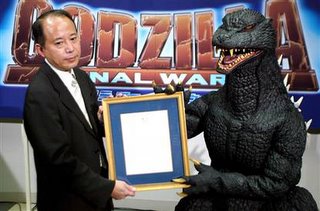
Just when doctors thought they were safe, along comes Patientzilla. He can breathe fire and he'll stomp on stuff if he has to . . . Empowered patients -- both individually and collectively -- are now a fact on the medical landscape.

The blogosphere, as Forrest Gump might put it, is like a box of chocolates: You never know what you’re going to get.

So imagine my surprise when a hematologist/oncologist, just the sort of animal that we CLL patients depend upon, decided to read my article at CLL Topics called Diagnosing your doctor. Dr. Vance Esler of Amarillo, Texas, was inspired to write a reply in his blog. His first post is called The Empowered Patient. He followed this with Why Your Doctor Doesn’t Want to Talk as Much as You Do.

Since I have a history of diagnosing doctors, and since I think choosing doctors wisely is essential to success in CLL, I was interested in his comments. Basically, Esler says a little knowledge is a dangerous thing but that informed patients are OK so long as they don’t try to practice medicine with his license.

That last point is a valid one, I think; we cannot expect to direct our doctors. We do need their expertise and advice. But we can expect to work with them. This means they should listen to our concerns, and we should listen to theirs.

“I have mixed feeli
ngs about working in the era of the empowered patient,” Esler writes. “It helps when patients are educated enough to make intelligent decisions and to cooperate with the plan. On the other hand, it is tiresome having to negotiate or justify every little thing . . . The information explosion, combined with a desire to treat my patients correctly, forces me to read constantly. It used to offend me and fill me with dread when patients would walk in with reams of stuff they had pulled off the internet. Now I am used to it. 99% of the time I can honestly say, "Yep, I am aware of that." Now I realize that people are just being diligent.”

From what I’ve heard from my CLL friends, and know from my own experience, not all doctors are diligent readers. We live in a sound-bite world, and too often I get the impression that some doctors are barely able to keep up with the headlines, let alone issues of substance that can be at the heart of life-or-death decisions for patients.

No doubt doctoring is a busy business. When I watch mine at work, as I sit for hours in the infusion chair, she is constantly running around the office and barely has time for a bite or two of lunch. And no doubt there are patients that one dreads to see coming. Anyone who works with the public is familiar with this feeling. I used to help run a hotel, and when certain people got within 15 feet of the front desk, I would look for any excuse to step away for a minute. There was one old lady who was such a pain that I wanted to buy her a T-shirt that read: “The more I complain, the longer God lets me live.”

But neither time constraints -- a topic to which Esler devotes a great deal of time -- nor the pain-in-the-ass factor are enough to justify an argument that patients, like good children of yore, should be seen and not heard. There is simply too much at stake for the patient.

Esler has some nice things to say about me and my blog, including that I have “a remarkable grasp (of CLL) for a lay person.” What he may not realize is that I am one of many “empowered patients” with this sort of knowledge, and that there are any number of CLL patients who know as much or more than I do. I just tend to write about it.

There are some compelling reasons why CLL patients, in particular, have felt it necessary to become informed, or empowered, or whatever you want to call it.

The first reason is the quirkiness of the disease itself. In most cancers there may be a very limited set of choices when it comes to formulating what Esler calls “the plan.” It’s almost hard to imagine after a few years in the trenches with CLL, but there may even be some “no brainers” out there: This is what you have, this is what you do, end of story.

In CLL, wise patients have no choice but to think for themselves. In a cancer where even the experts disagree -- think of Dr. Terry Hamblin and Dr. Michael Keating debating the value of heavy-duty chemoimmunotherapy, which they have in fact done in person (click link at very bottom right) -- our very survival can depend upon our ability to question our doctors’ assumptions. This most definitely includes those doctors on the local level who may not be up on the latest, and whose thoughts about treatment may be somewhat outdated. Countless patients have learned the hard way that it pays to be diligent.

[NOTE: If you use the preceding link to CLL Global and read Dr. Keating's version of his debate with Dr. Hamblin, please also see Dr. Hamblin's comment under the "Comments" link at the bottom of this post.]

The search for objectivity

Esler writes: “There is a major caveat to the proactive patient approach: patients who direct their own care lack objectivity. It is said that a physician who cares for himself has a fool for a doctor. Patients who insist too much on directing their care may become just as guilty of that.”

In a narrow sense, I understand what he is saying. Doctors are trained to look at symptoms, blood test results, and the like, and to see a complete picture. Some patients may be fixated upon a particular symptom, may not understand where a particular test result fits in the order of importance, may let emotional issues cloud their judgment, and so on.
But many doctors treating CLL are just as clueless. My own experience with Dr. Lippencot shows what can happen when a doctor mistakenly gets fixated upon a particular symptom. A medical license is no guarantee of expertise. I would venture to say that a majority of CLL patients posting to internet forums have felt compelled to change oncologists at some point. It’s not that these patients want to direct their treatment and are looking for a pushover with a prescription pad. They simply want to find a doctor who they feel is truly competent in CLL, and who is willing to treat them as a partner in the process of formulating “the plan.”

Patients, through their own experiences and from talking with others online, quickly realize that there are any number of subtleties that can be easily missed, or misconstrued, by doctors. Take staging, for example. Dr. Hamblin has quoted Dr. Kanti Rai, the namesake of the Rai staging system, as saying that his entire system would have to be thrown out if one uses CT scans. Doctors using CT scans for CLL are seeing things that Rai, when he developed his system in the 1970s, could not. The result is that patients can be staged “later,” or the disease can be thought to be worse, than it actually is. Hamblin points out that a CT scan will probably show a swollen lymph node in a Stage 0 patient. In another patient it may show a swollen spleen, but if that spleen cannot be palpated, it is inconsequential in the Rai schema. Yet how many Lippencots out there are rushing to treat based upon blobs they see on X rays, failing to put that information into context? Far too many, I’m afraid.

So wise patients -- by necessity -- need to develop some objective sense of the details of their particular case, and where that case fits into the scheme of things. In CLL, only a fool blindly follows a doctor’s orders.

Beyond the technical questions, I think a patient needs to come to grips with his or her condition in order to participate intelligently in the process of treating it. Some -- the ostrich crowd -- don’t want to know, of course. But many patients want a basic understanding, and some want to know everything they can.

Getting some sense of “where I stand” or “the big picture” is, in fact, part of human nature. The world is made up of many kinds of people. Some, who are probably more passive in their non-cancer daily lives, might prefer that a doctor tell them the answer; others, the more strong-willed to begin with, want to know through their own examination of the evidence. They may seek the counsel of a doctor or two, but reserve unto themselves the final determination of “truth.”

So, for any number of reasons, the search for objectivity has become a major task of informed patients. It consumes many an online discussion. Patients are always talking about such things as: Does this symptom mean I need treatment? Which treatment is best given my type of CLL? What are the consequences, down the road, if I use this treatment today?

The CLL Internetwork

This need to figure out what is going on has given rise to a well-developed network of online resources. What I know about CLL is not the product of original research; it is a synthesis of the information available in such places as CLL Topics, the ACOR list, Dr. Hamblin’s blog, the CLL Research list on Yahoo, and perhaps a dozen other places. In these sites I have found links to countless abstracts and articles, and I have also found intelligent discussions of what all these things mean and how they apply to given cases.

I see my little role in this internet enterprise as one in which I help provide some context. I hope to show, in between occasional tangents, how all this information can be prioritized and organized and used in a practical way by patients trying to figure out what to do.

This CLL Internetwork -- I’ll give it a name, and perhaps it is the real Patientzilla -- is used by doctors as well. There are local oncologists who follow CLL Topics, for example. And Topics science writer Chaya Venkat -- a retired research chemist with a doctorate in education -- has developed a good working relationship with some of the top doctors in the field. She can turn to them for information and counsel, and, in turn, she can suggest ideas about clinical trials, prognostic tests, treatment possibilities, and so on. This shows how the internet is a two-way street, giving patients more information but also enabling receptive doctors and researchers to understand what is on the mind of the patient community.

Dr. Hamblin’s presence on ACOR and through his blog also makes an important statement, that here is where his duty is, and here is where the action is. It helps that he is semi-retired and has the time, but it says a lot that he spends it on the net working with patients. Dr. Hamblin, in case you don’t know, is one of the top CLL experts in the world. And what he says definitely gets back to oncologists in countless localities, expanding their understanding of CLL through the patient as intermediary.
A quick example of the growth of an idea is the concept of Rituxan plus G-CSF as a useful frontline therapy. CLL Topics has been beating the drum about this (with EGCG and fish oil added to the mix, in a protocol nicknamed "RHK") for years. A ripple effect started as patients began to convince their local doctors to give it a try. Now, in an important new blog post, we see that this concept has been endorsed by Dr. Hamblin, who has been able to review the anecdotal evidence regarding its use over the course of time. This, in turn, will probably help the concept ripple even further -- an idea born on a patient site on the internet, and coming to an oncologist near you.

The point of all this is that the CLL Internetwork is here to stay and is symptomatic of something that is spreading like a cancer (forgive the pun) across cyberspace: the free availability of information to patients with all sorts of ailments.

This will only expand as time goes on. The net effect (yes, another pun) is that patients will become smarter consumers of medical services. This may be uncomfortable for some doctors, especially those who would rather not be bothered answering questions or discussing details. They will no doubt stay in business, though, because there is a doctor shortage in many places. And because there will always be those patients who prefer to not know, who just want the doctor to fix them. It never ceases to amaze me, as I sit for my Rituxan infusion in what the nurses call Chemoland, that a lot of my fellow patients don’t even know the names of the drugs being pumped into their veins.

For some doctors, who do not carry the baggage of thinking they have the truth in a medical bag, this new era may prove exhilarating. (Even the skeptical Esler says that it “can be fun” to work with educated patients so long as they are “nice” and “respect the doctor’s time.”) There are doctors who have an open approach, who say that learning from patients is one of the pleasures of their profession. These doctors actually appreciate the abstracts, articles, treatment protocols and other information patients have brought to the office. Humility is important in any role we play in life, and that goes for both patients and doctors. We all have room to grow in our knowledge of things.
Patient empowerment is now a fact in the medical landscape. The cat won’t go back in the bag, the horse is wandering well away from the barn, and the whole damned camel is in the tent. And this means that the era of the paternalistic doctor will slowly -- very slowly, perhaps -- come to an end.

I get the sense from Esler’s posts that he is not exactly embracing this change, but rather accepts it as a fact of life that takes some getting used to. He is undoubtedly not alone. But he is living, as the Chinese saying goes, in interesting times. The dissemination of knowledge cannot be stopped, and knowledge is power. If you doubt that statement, think of China again. There is a reason the Communist government in Beijing wants Google to censor its search results for Chinese net surfers.

Where the buck stops

If you think about it, people should be empowered about their health, whether they have cancer or not. We should all have an understanding of the basics of how the body works and how best to maintain it, and we should realize that this maintenance is an active responsibility. There seems to be a disconnect in Western society at times, in which people tend to regard their bodies as they do their cars: something to be used any way they like, which can then be towed into the shop to be fixed. Would that it were so.

If I were to define the term “empowered patient,” I would say it is someone who has researched their medical condition and who expects to be involved in determining how it is to be handled.

But there is more to it than that. The empowered patient is one who understands where the power to make decisions ultimately lies. When it comes to deciding on treatment, let’s remember who is employing whom. Patients must be comfortable with what is being proposed for their bodies. They have every right to expect a reasonable discussion of the options. If you’re suggesting that I use a drug with potentially major, perhaps even fatal, side effects, I have every right to expect a few extra minutes of your time to talk about it.

Esler says doctors are sometimes loathe to spend much extra time on patients, pointing out that doctors are generally paid by the job and not the hour. This situation, he says, is the result of price controls forced on doctors by private insurers and Medicare, and means doctors earn their money on volume of patients seen, not on the time spent with each patient. Esler says this isn’t ideal, but it’s just the way it is.

I think almost every patient eventually realizes that we Americans are not living in an ideal world when it comes to the health care system. Rube Goldberg could not have devised a “better” contraption, but that is a rant for another post. Esler’s comments bring home the fact that, to get the most out of their care, patients should be as prepared and focused as possible during their office visits.

But beyond that, there are times when it is necessary to say “damn the system, full speed ahead.” I see adequate communication between doctor and patient as something essential to getting the job done right. As I learned in the hotel business, there are low-maintenance guests and there are high-maintenance guests, and at the end of the day it all pretty much balances out.

Given the pressures and shortcomings of the health care system, perhaps it is all the more challenging to find a doctor whose dedication to his or her craft sufficiently outweighs his or her concern about the bottom line. There is a big difference between doing a job and being dedicated to a craft, and this difference in attitude can be found among people in any profession. My dentist has a sign in his office, something to the effect that every patient gets the personalized attention they need, so please be patient. He is always running late. Good for him.

When it comes to the question of power in the doctor-patient relationship, I will close with a story about Abraham Lincoln meeting with his cabinet shortly after he took office. The cabinet considered an issue and voted to proceed in a certain way. Lincoln was alone in disagreeing with them. He pointed out that his views would prevail since, being the president, he was “a majority of one.”
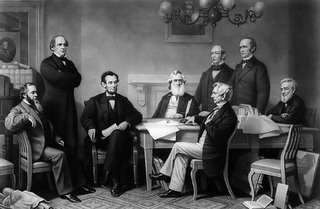
Well, you are the president of your body, serving a lifetime term. You are the one who must make the final call, and you are the only one who has to live with the consequences. Like Lincoln, you can choose to go along with your advisors -- or not.


The balance of power rests with the patient. The doctor proposes, the patient disposes. In the era of the CLL Internetwork, patients can do so with greater wisdom and intelligence. Doctors had better get with the plan.